A Look Inside Chicago's Academy for Global Citizenship
Chicago's Academy for Global Citizenship combines a dual-language curriculum with an International Baccalaureate program and a focus on environmental sustainability. Can their unique model win a 10-year renewal from a board that wants to put charters on a shorter leash?
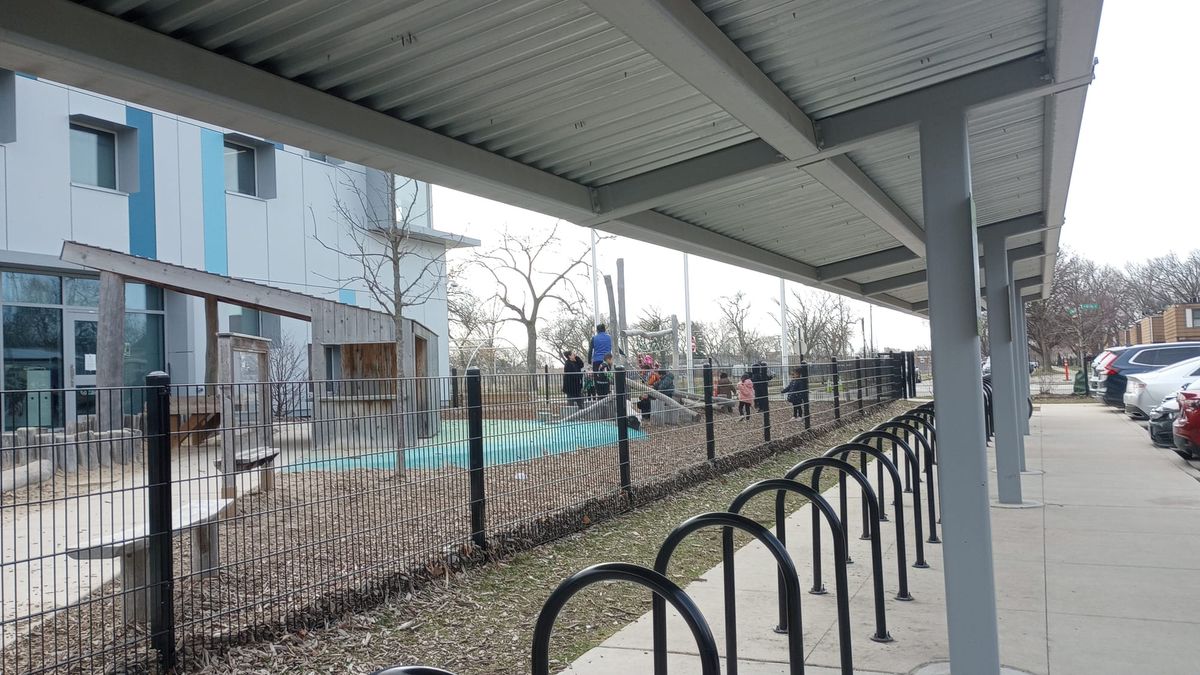
What if your child could go to a Chicago school located on six acres of open land, where kids can run, climb, and play soccer at recess without putting out sawhorses to block a street? What if the cafeteria didn’t just cook lunch from scratch, but grew some of their own food? What if your child could learn through the International Baccalaureate program in both Spanish and English?
Nearly 500 Southwest Side children are doing all those things at the Academy for Global Citizenship, a charter school that opened in 2008 and moved into its current, custom-built campus in 2023. Though no school is perfect, AGC, as the school is commonly known, has a clean bill of financial health and boasts lower chronic absenteeism and higher rates of elementary students on-track than the school district as a whole. Those higher measures of student attendance and academic performance hold true for English learners and students receiving special education services.
For months, the AGC community has campaigned hard for a 10-year renewal, the maximum allowed by law. Every single board member has visited the campus. Parents, teachers, students and alumni have spoken at board meetings. The current board has moved to tweak the rubric used to decide how long a charter should be renewed and to shorten renewals generally. AGC, like other charter operators, argues that shorter renewals distract from school improvement and make it harder, if not impossible, for charters to obtain financing for construction. Next week, Board Rule will take a deep dive into charter renewals. Today, we’ll take a close look at AGC itself.
Learning: Relaxed, Interactive and Hands-On
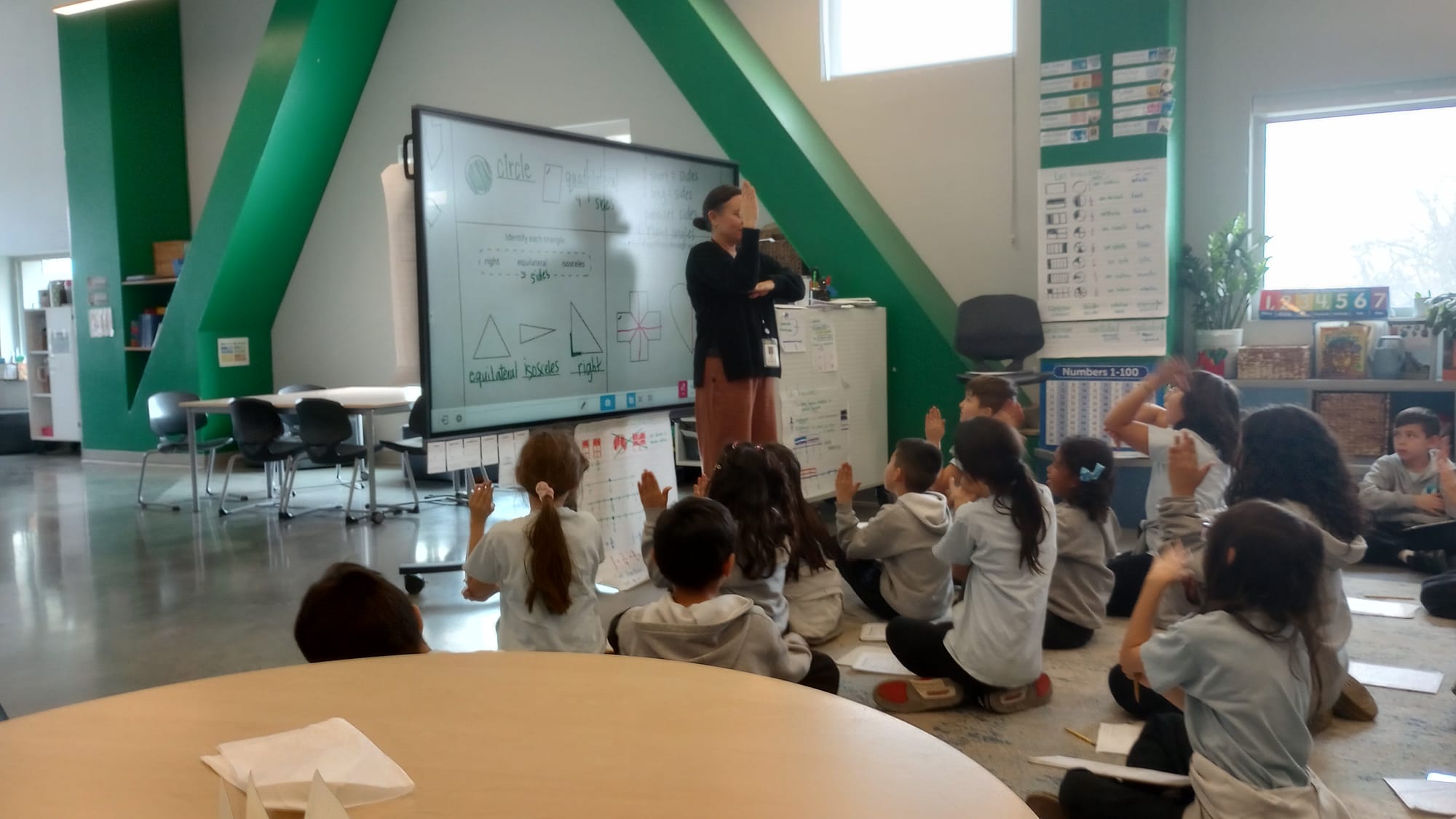
AGC’s school day is organized into three main chunks, with blocks of time for math, language, and interdisciplinary learning in line with International Baccalaureate’s educational principles. During a visit to AGC, Board Rule zeroed in on math classrooms, since students’ most recent state test scores are notably weaker in math than in literacy.
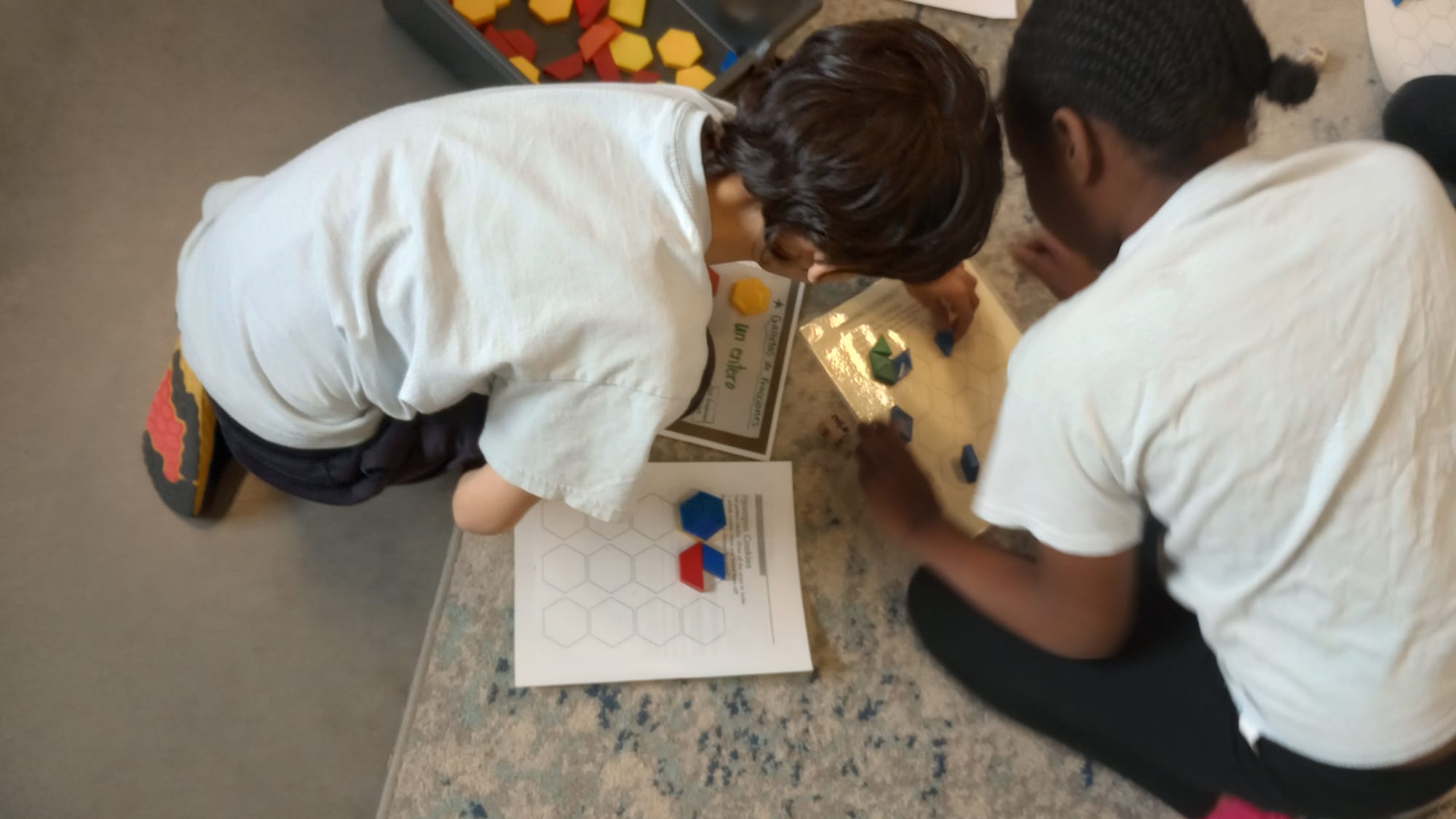
Liz Fyffe is the lead teacher for a “village” of second and third-graders. Fyffe co-founded AGC’s dual-language program. Her IB coach described her as a “math nerd,” and her passion and commitment to math came through in all the activities of the day, from leading students through body movements to understand angles to math table talks with small groups of students reviewing for the state test. While she led the table talks, other groups of students worked independently, either reviewing problems on tablets or playing a fraction game with their peers.
Later, in the middle school, groups of students were using box-and-whisker plots to analyze data. Each group had its own data set, whether looking at wait times in the cafeteria or the growth rate of plants. The group projects were preparation for a final assessment, where the students would be asked to analyze data they collected on their roller-skating speed during a recent field trip.
“Roller skating is like math,” said teacher Aaron Fischer, praising them for their perseverance as rookie roller-skaters. “I saw you fall down and get up so fast. I was impressed. This is the type of behavior we need to be doing in math, too.”
“The teachers are really what make that building and that school as incredible as it is,” said Jessica Fong, an educator and parent of a recent graduate who now attends Whitney Young Magnet High School.
An experienced dual-language teacher herself, Fong praised AGC’s dual language program, especially its commitment to maintaining a 50/50 balance of academic Spanish and English in its middle school. “I have seen some dual language schools, in middle school they kind of slide into mostly English,” she said. Not AGC.
“The focus on the holistic child, where it’s not about academic rigor, where they still have a childhood, we thought that was really important for our family.” Though her son has experienced some “culture shock” in transitioning to Whitney Young and its high academic expectations, Fong thinks in the long term he’ll appreciate AGC’s more relaxed approach to academics and the broader lessons he learned. “We still see him talking about social justice issues and having really thoughtful conversations about politics and fairness and equality, and all of the things we loved about AGC that are not on the test.”

Innovation and Impact
Beyond the classroom, AGC is a leader in school facilities and operational sustainability. A row of solar panels by the hoop-style greenhouses helps power the campus, which over a year produces at least as much energy as it uses. Those greenhouses grow vegetables for both the school’s kitchen and the Little Leaf Market, a project of AGC’s affiliated nonprofit, Cultivate Collective, which manages community education and sustainability initiatives across the six-acre site.
AGC has partnered with CPS to share its innovative practices with schools and with central functions like food service. Founder Sarah Elizabeth Ippel estimates AGC has influenced a quarter of district-operated schools through projects like its school garden manual and trainings on dual language and IB, and has worked with CPS leadership to determine “what elements of our food program can be adopted by the district’s food service provider as a whole.”
Financing their new school building was a complicated project. A state grant allowed them to borrow less money than usual for facilities, said operations director Paul Guilianelli. But their six-year renewal last time was key to getting a bank loan approved. “US Bank took a chance on us based on that longer renewal. If it was shorter– ”
“We would not be here,” finished Ippel.
The Most Important School Board Story You Haven't Read
The most important school board story you probably haven't yet read didn't come from Board Rule, or Chalkbeat, or the Tribune, or WBEZ. It came from The VP Chicago, a new digital outlet focused on the South Side and south suburbs.
Raise Your Hand board president Cassandra Kaczocha, a key source for the story, described the gulf between grassroots leaders' vision for an elected, representative school board and the reality of the hybrid board seated in January 2025. While she and others hoped that having "parents and regular humans" on the board would lead to greater ground-level understanding among board members, so far, plenty of obstacles have been placed in the way. "All those same policies that the appointed members get held to and trained on by CPS are what the now-elected board members are being told as well."
As The VP's Inez Woody and Kelly Glass put it, "The structure changed. The culture didn't." The story makes a powerful case that the way to change the culture is for ordinary Chicagoans, especially voters, to put pressure on CPS by electing board members who are ready to ensure that students and families aren't just affected by policy, but have real power to create policy.
The story's headline says it all: "The South Side parents who fought for an elected school board say this isn't what they wanted." Read it here.
Comments ()