A Paid School Board for Chicago?
As the Chicago Board of Education shifts from an appointed to an elected body, the idea of paying school board members is gaining steam.

Elected officials get paid. The Chicago Board of Education is about to become a fully elected body. Shouldn’t they get paid, too?
This argument appears to be gaining traction. State Rep. Marcus Evans, Jr. has sponsored a bill that would allow the Chicago school board to pay itself. The bill does not specify how much board members could be paid. It is currently assigned to the House executive committee, signaling it is considered a significant issue. The Chicago Teachers Union supports the bill. The Chicago Tribune Editorial Board came out in favor of the idea this morning, noting this is "the rarest of incidences where we agree with the CTU."
Many Chicagoans may already assume that board members are paid. Last week, I spoke with a Back of the Yards College Prep parent who expressed frustration that she hasn't seen her board member, saying, "I feel like they should be more involved in their district, and that's what they're getting paid to do."
When I explained that not only are board members not getting paid, but two board members have already quit their full-time jobs to keep up with board work, she was surprised.
"Imagine if they got paid, there would be more people signing up," to serve, she said. That was part of the rationale for pushing for the change.
Paying school board members seems to be widely popular. A 2023 poll sponsored by Kids First Chicago, before the first group of elected board members ran for seats, showed 71% of respondents supported a salary or stipend for school board members.
But state law now forbids Illinois school boards from paying their members. Illinois State Sen. Robert Martwick, the author of the legislation that created an elected school board for Chicago, has tried twice in the last three years to pass similar legislation. Both his bills failed. Martwick recently told the Chicago Tribune he faced pushback from legislators who argued that school boards should be about public service. In response, he said, "So is serving in the General Assembly. Do you waive your pay?"
Sendhil Revuluri, the former appointed school board member now running for president of the Chicago Board of Education, said in a statement, "I support compensating board members, because broader access strengthens our schools. But compensation must come with real accountability: required training, meaningful evaluation, and measurable results for students."
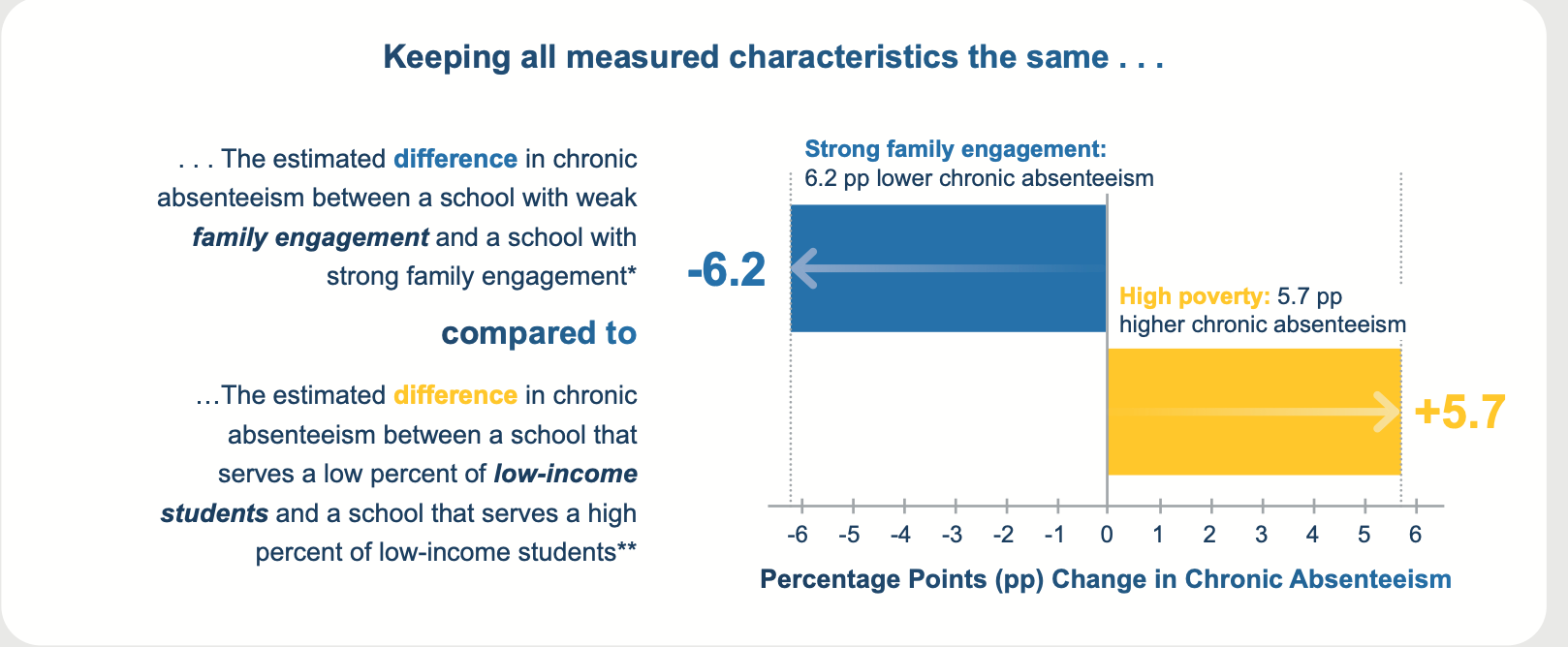
Family Engagement Helps School Attendance More Than Poverty Hurts It
A new study from TNTP and Learning Heroes shows that Illinois schools with strong pre-pandemic family engagement, as measured by the UChicago Consortium on School Research's 5Essentials survey, saw lower chronic absenteeism than schools with weak engagement. High levels of pre-pandemic family engagement also appeared to reduce pandemic-related declines in students' academic performance.
Schools that excel in building family engagement share four distinguishing factors:
Mindset: Families are equal partners with schools in helping students succeed. As one successful principal described it, "I tell parents every year: you know your kids the best. We never know better than you. We're obviously experts in this subject, but this is a hundred percent a partnership."
Leadership: Principals set clear expectations with teachers for how to communicate and engage with parents. They spell out how often to communicate with families and guide on what to say and how to say it.
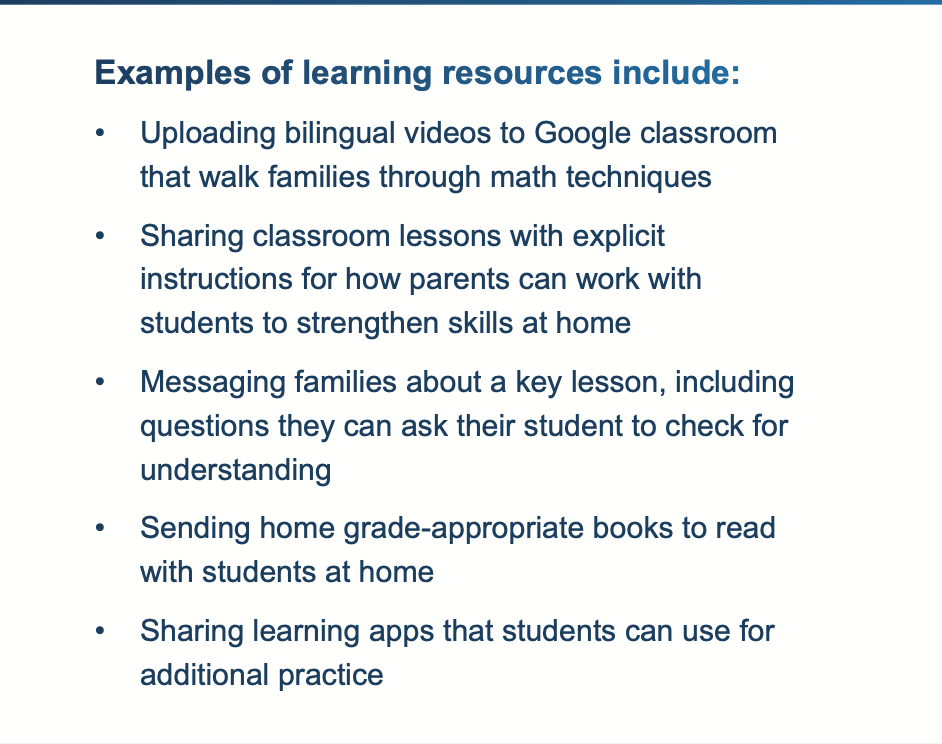
Communication: Parent-teacher communication is one-to-one, proactive, consistent, and focused on the student's academic performance. Teachers share learning resources that parents can use at home to help their children improve academically.
Last Friday, the University of Chicago's Kersten Institute hosted "Present and Thriving," an event at the Chicago Cultural Center focused on the causes and consequences of chronic absence, and panel conversations with leaders at all levels working to reduce it. Back in January, the Chicago Tribune highlighted Chalmers Elementary as a standout school, creating the kind of climate that makes kids want to be at school and motivates families to ensure they attend consistently.
If you missed Friday's event, this panel conversation from January covers much of the same ground.
No Tax-Credit Scholarship Advisory Referendum in Chicago
The Illinois primary will wrap up with in-person voting on Tuesday, March 17. Illinois Policy, the advocacy arm of the libertarian, nonprofit Illinois Policy Institute, has put an advisory, nonbinding referendum on the ballot in 28 counties plus townships in four additional counties asking voters:
"Should Illinois opt into a federal program that would provide public K-12, private school, and homeschool students with privately donated funds for academic needs, such as tutoring and test preparation, educational therapies for students with disabilities, tuition, books, exam fees or for other specified academic needs?”
What the question does not say is that these funds would come from a federal tax-credit scholarship program created last year as part of the Trump administration's One Big Beautiful Bill. As Chalkbeat Chicago reported in February, the program would offer a dollar-for-dollar tax credit in exchange for up to $1700 donated to scholarship granting organizations. The program operates nationally much the same way Illinois' former program, Invest in Kids, operated until it phased out in 2023.
Chicago is not among the locations where the advisory referendum will be on the ballot.
School Board Candidate Updates
Victor Henderson, a noted Chicago trial lawyer who sits on the board of the Urban Prep Academies charter network, is running for school board president.
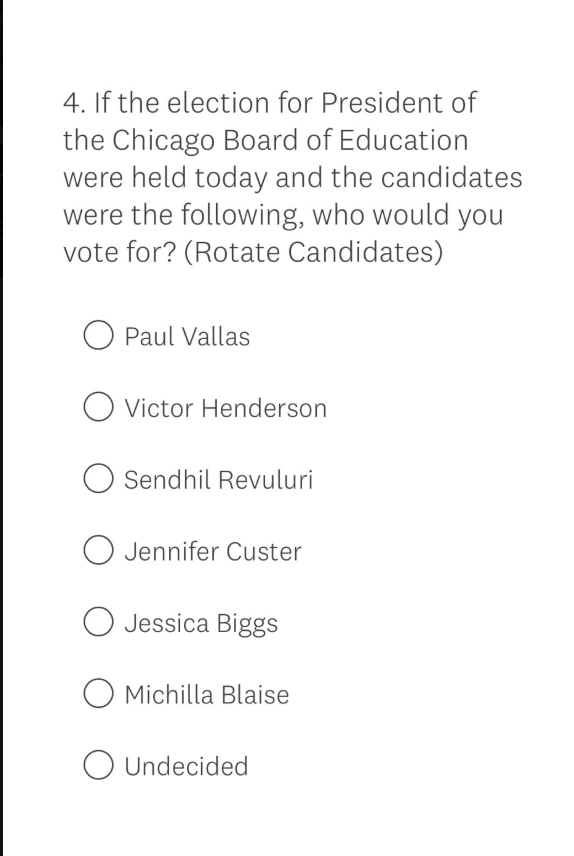
A recent anonymous Internet poll gauging interest in candidates for school board president presented these possible contenders. (The Chicago Tribune's Greg Pratt posted it on X.) Revuluri, Custer, and Henderson have officially filed with the state board of elections. Jessica Biggs and Michilla Blaise are reported to be considering running. Board Rule has no direct information about whether Paul Vallas is considering a run.
Last week, Jennifer Custer confirmed to Board Rule that she is only circulating nominating petitions for president, not for her current board seat. That leaves Claudia Peralta and Michelle Pierre as the candidates running in District 1B.
Comments ()