Chicago School Board Report Card: Q1 2026
The Chicago Board of Education still struggles to make time to focus on student outcomes, but board members are asking more and better questions.
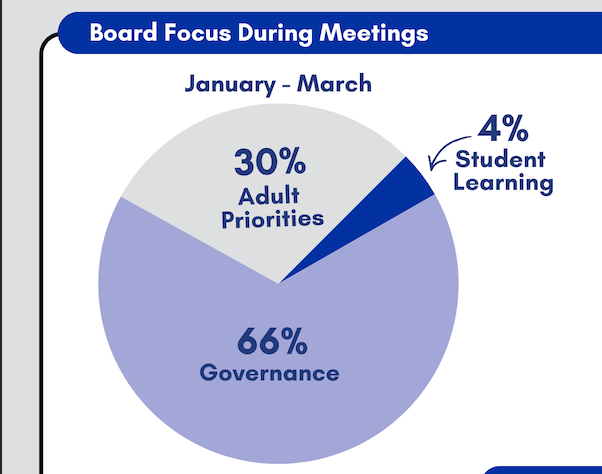
In the first three months of 2026, the Chicago Board of Education spent two-thirds of its public meeting time on governance issues. The board made several substantive decisions: hiring interim Superintendent/CEO Macquline King as the school district's permanent leader, closing ASPIRA charter schools due to financial problems, and challenging school district recommendations for Local School Council appointments and staff dismissals.
At the same time, direct discussion related to student outcomes took up a mere 4% of the board's public meetings, the lowest share since taking office. It's not uncommon among school boards nationally to see governance and operational issues take priority over attention to student learning. The Council of the Great City Schools encourages school boards to set a goal of spending 50% of their time on student outcomes, though some districts that have tried their approach are changing course.
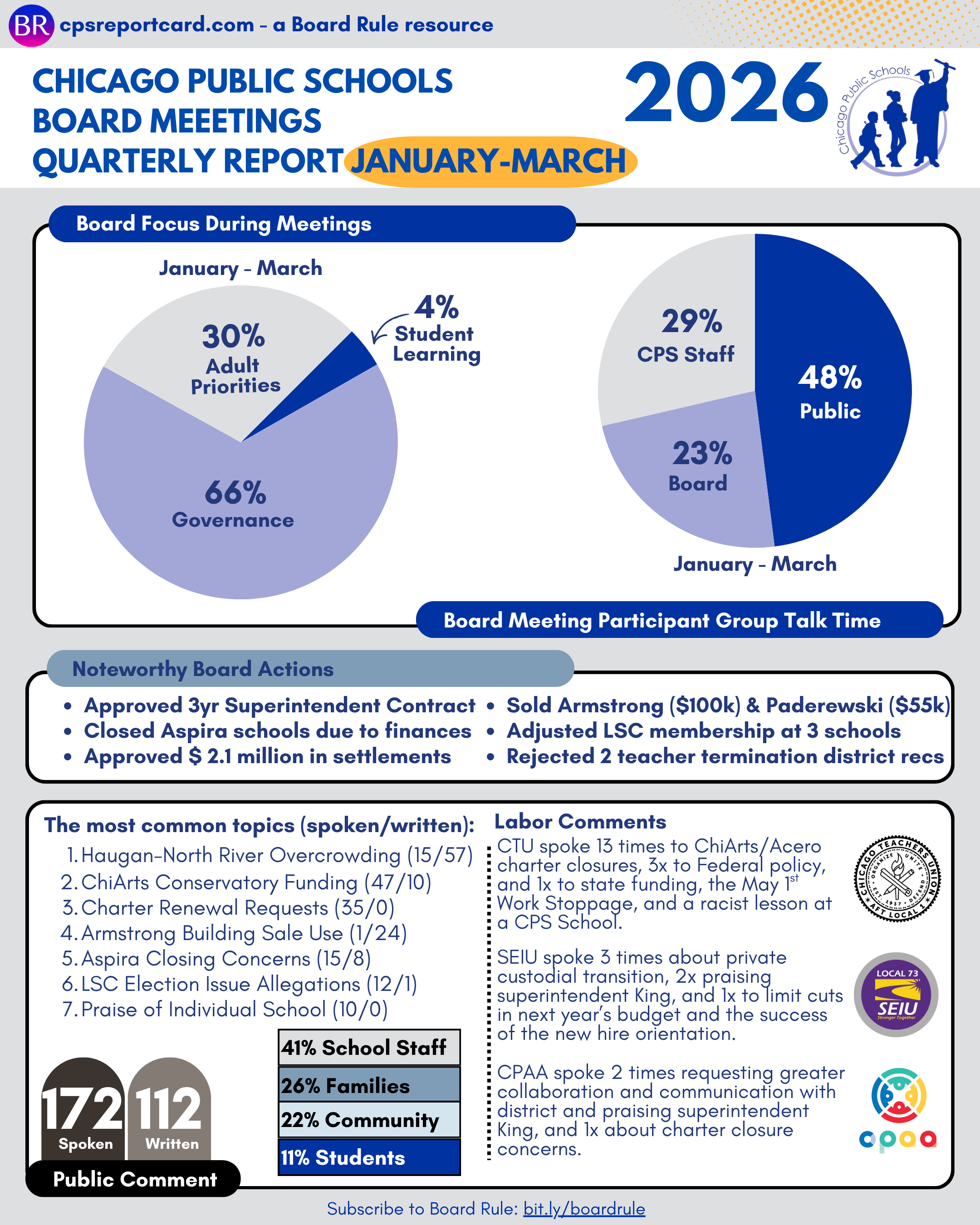
Board members are tightening up their speaking habits, speaking for less than one-quarter of the total meeting time. Meanwhile, the public, through public comment, is taking a larger share of meetings' airtime. This is especially striking since there were three additional special meetings this quarter, giving board members more opportunities to speak publicly. How did this happen? Parrott-Sheffer suggested that board members have now served for a complete year and are more familiar with the cadence of issues. This likely means they have fewer questions and can target their comments and questions more effectively.
Methodology: Since the partially elected school board took office in January 2025, education researcher and former school board candidate Adam Parrott-Sheffer has been tracking the Chicago Board of Education's public meetings and policy decisions through four quarterly report cards and an annual review. He categorizes board comments and public participation into three broad categories:
Student Learning refers to direct conversation about instruction and student outcomes.
Governance covers policy matters, votes, finances, and public discussion between the board and Superintendent/CEO Macquline King.
Adult Priorities captures remarks that do not directly address governance or student learning, including recognition of staff and students for reasons not directly connected to student outcomes in the Chicago Public Schools' five-year strategic plan. [Procedural comments, like the opening call to order and the board secretary's explanation of the public comment process, are not included in the analysis.]
In a change from last year's data collection, Parrott-Sheffer is now reviewing written comments submitted to the board as well as public comments spoken during the meeting.
Board Members Are Asking More Questions
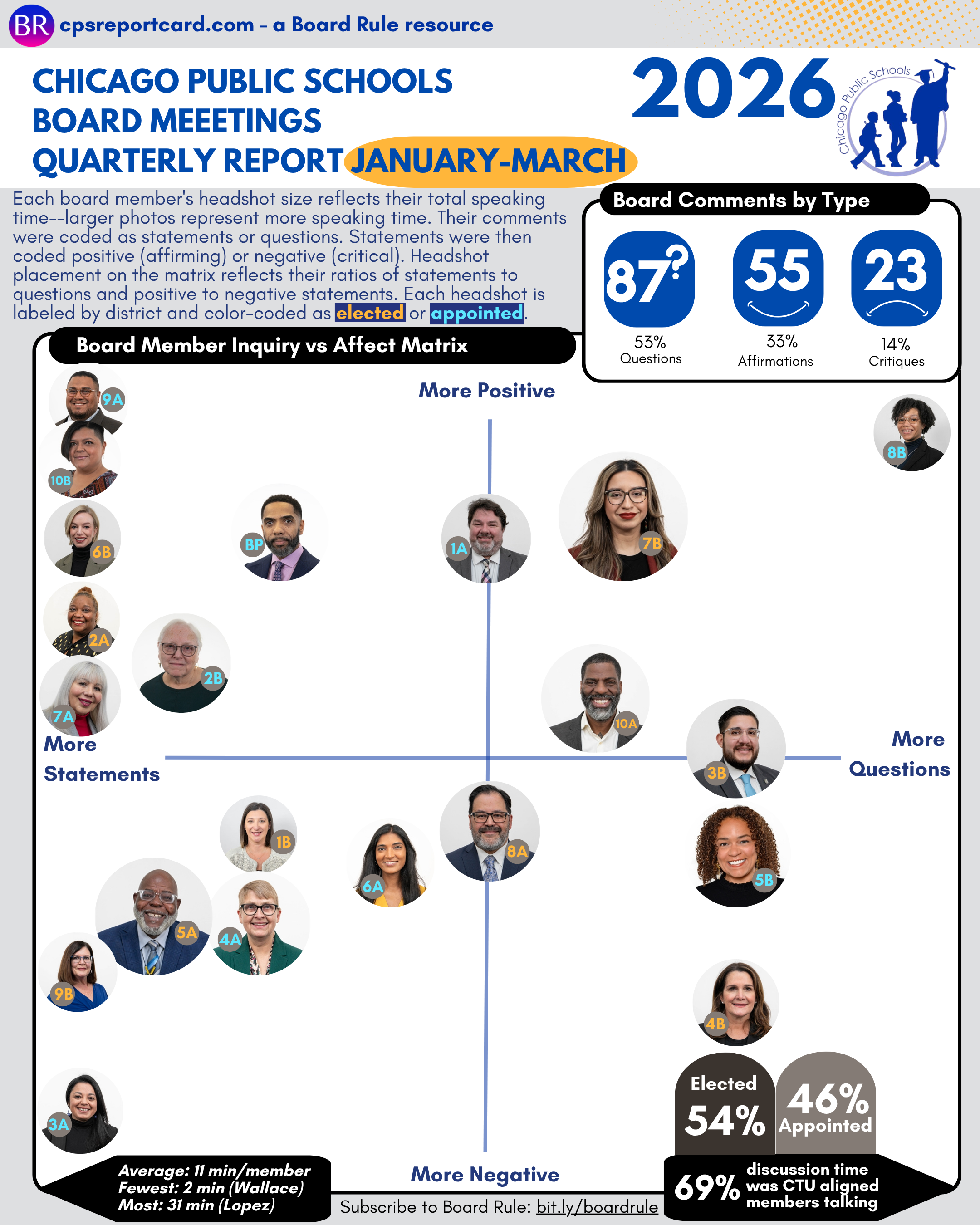
While board members are so far generally keeping their statements more concise than they did last year, the number of questions they asked this quarter more than doubled from the last quarter of 2025. Parrott-Sheffer sees this as a good thing, especially when board members are asking questions during agenda review meetings. "I would expect a lot more questions at [agenda review meetings] because the job is for you to be surfacing things you want the district to attend to" before voting on their proposal.
"Is there a communication learning that could make them more effective as board members?" Parrott-Sheffer asked. He suggests that preparing questions in advance, even just jotting them down during a CPS presentation, and asking them to staff one at a time might help board members be even more targeted and get all the answers they are seeking.
Eyes on Professional Development Contracts
Last week, board member Karen Zaccor (4A) offered a textbook example of that kind of questioning. The agenda review committee meeting included a proposal to renew its contract with a pool of 60 companies offering various kinds of professional development for teachers and principals. After Jacob Stefan, who manages professional learning for CPS, finished his presentation, Zaccor, a former high school science teacher, immediately asked, "Can you say what percent of the vendors are specifically supporting Skyline, which we understand to be our preferred or primary curriculum?" In the moment, Stefan could not provide a hard number.
Zaccor told Board Rule she is asking staff additional questions about how the companies were initially vetted and later evaluated. During his presentation, Stefan referred to the high satisfaction ratings the vendors have received. Although school districts commonly use satisfaction ratings to evaluate the quality of professional development, Zaccor noted, "Someone saying 'I liked the PD' is irrelevant to 'the PD made me change my instruction.'"
From her experience as a teacher, Zaccor has some knowledge of some of the vendors and observes differences in their quality. But she acknowledges she doesn't know all of them and does not have time to research all 60 vendors. But asking questions does shake up business as usual, she said. "We can ask questions, and that's new for CPS. ... We have stopped a couple of contracts." But she questions a system that leaves board members voting without answering all their questions. Sometimes, she says, she receives "non-answer answers" to her questions and has to vote on the item anyway.
Events
CPS Capital Plan Meetings. In April, CPS will hold both virtual and in-person community meetings to share information and gather input to inform the school district's 2026-27 capital plan. The full schedule and registration link are here. This year's spring survey allows respondents to answer questions about the construction needs in schools they know, and to fill out the 5Essential survey for parents about school culture and climate. To take part in either survey, click here.
School Board Candidate Events. Jessica Biggs holds her launch event to campaign for school board president on Thursday. Norma Rios-Sierra, incumbent in District 3A, is holding a fundraiser on April 24. Claudia Peralta, candidate in District 1B, is holding a fundraiser on April 30.
State of the Arts Convening. Join Ingenuity at the Art Institute of Chicago on April 29 for a lunch gathering and celebration of the arts in Chicago Public Schools. Registration here.
Heads-Up! On April 9, the Chicago Board of Education announced it would change its process for posting notices of meetings. The board will now include weekends and holidays when it calculates the 48-hour advance notice needed to post information about an upcoming meeting. Given the number of special board meetings we've seen in the last year, this suggests board-watchers will need to keep their eyes peeled.
Seen
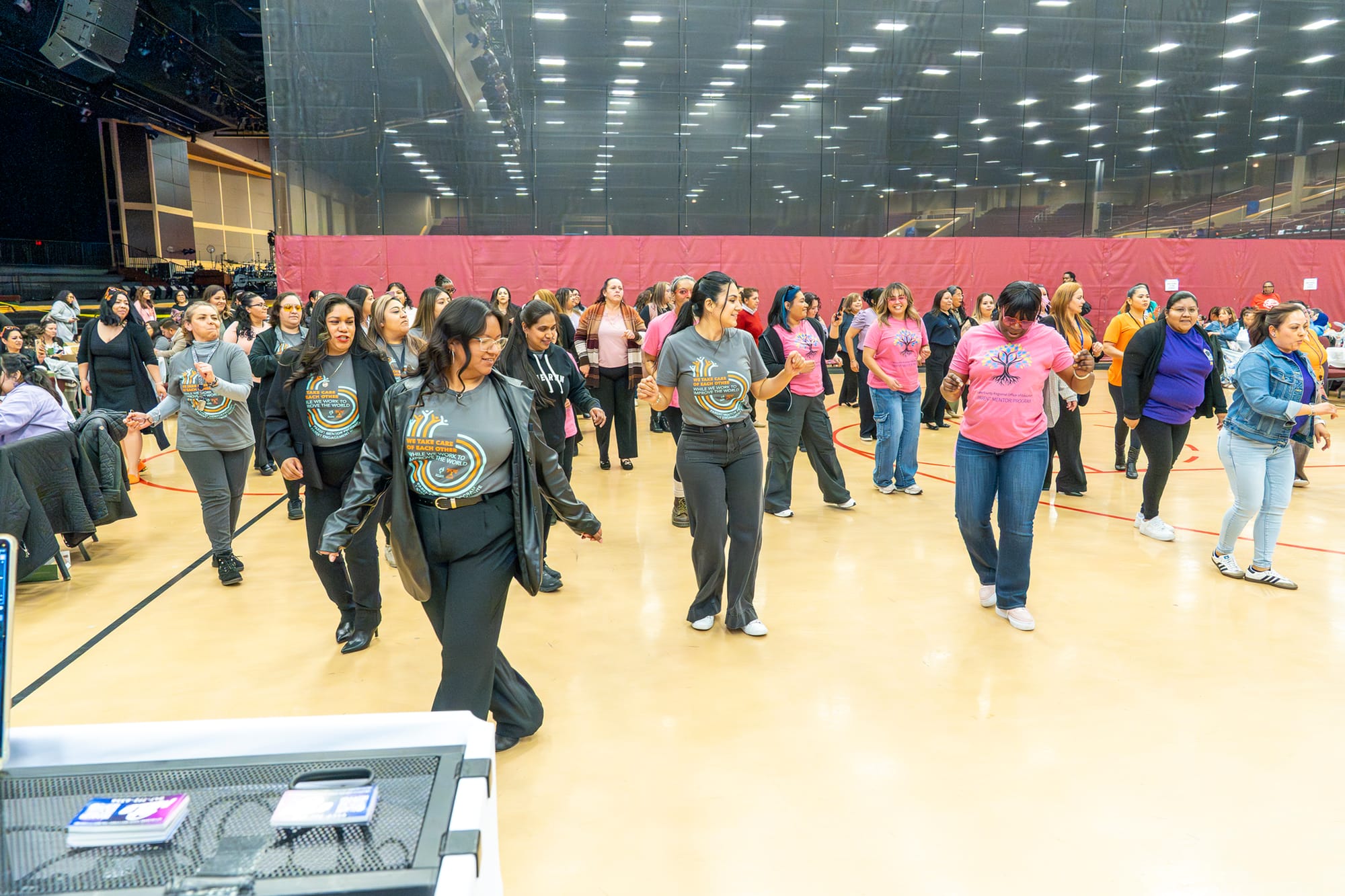
In 1995, the Logan Square Neighborhood Association (now Palenque LSNA) and a group of neighborhood schools founded the Parent Mentor Program, which hires CPS parents, mostly Black and Latina moms, to tutor children for 2 hours a day, four days a week, and receive training in instructional practices and community leadership on the fifth day. Long-term research has shown that the 97% of children of parent mentors graduate from high school and 87% go on to college.
In addition to helping children learn, parent mentors build trust with each other, with teachers and school staff, and with other parents in their schools. In 2005, the Southwest Organizing Project successfully replicated the program, and in 2012 the two community organizations won funds to expand it statewide. Today, the Parent Engagement Institute stewards Parent Mentor programs across Illinois and beyond.
"It's a joy when they see me, I love it," said Duwana Denton, a first-year parent mentor who works with a kindergarten class at Mann Elementary in South Shore. "Whatever children don't know, we're gonna teach them. And we just love what we do."
Comments ()