How Will Chicago's Elected School Board Govern?
Skillful coalition-building will be key to the incoming board's success.
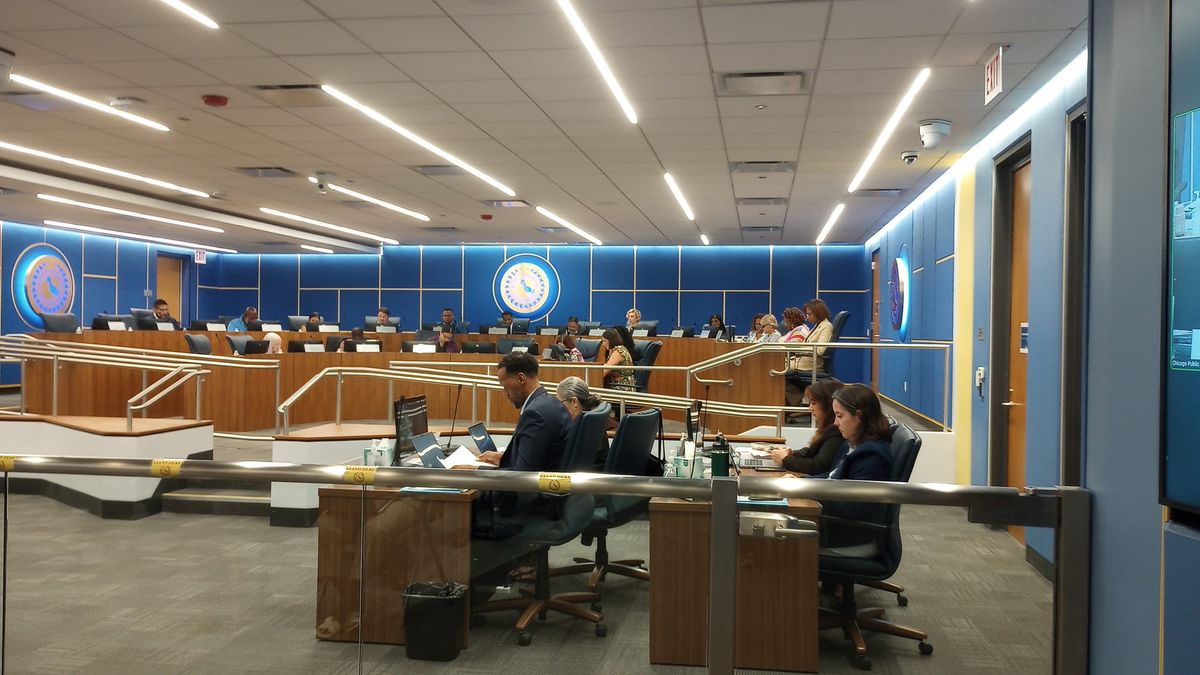
As of late Thursday night, the school board election results were nearly final. Michilla Blaise declared victory in a Facebook post, though the Associated Press had yet to formally call the race. Races in District 3B (Jason Dones/Carlos Rivas) and 6A (Isaiah White/Anusha Thotakura/Brenda Lee Anderson) remained too close to call.
Nonetheless, public discussion now centers on how the board members will--or won't--build alliances across lines of difference to get things done. Much has been made of the nearly even split between board members who usually support the Chicago Teachers Union's agenda and those who don't. But many close observers of the board have begun complicating that narrative.
On Wednesday, Kids First Chicago released a memo analyzing the new school board members' policy stances and how those stances could create coalitions sufficient to maintain current board practices, like not granting new charters but supporting existing ones, or create new policies, like stricter limits on AI. But, as the report observed, "The election results and candidate questionnaires do not establish a fixed governing coalition." Rather, it will take cooperation, issue by issue, to establish a majority.
The full memo will be released next week, but here are some highlights.
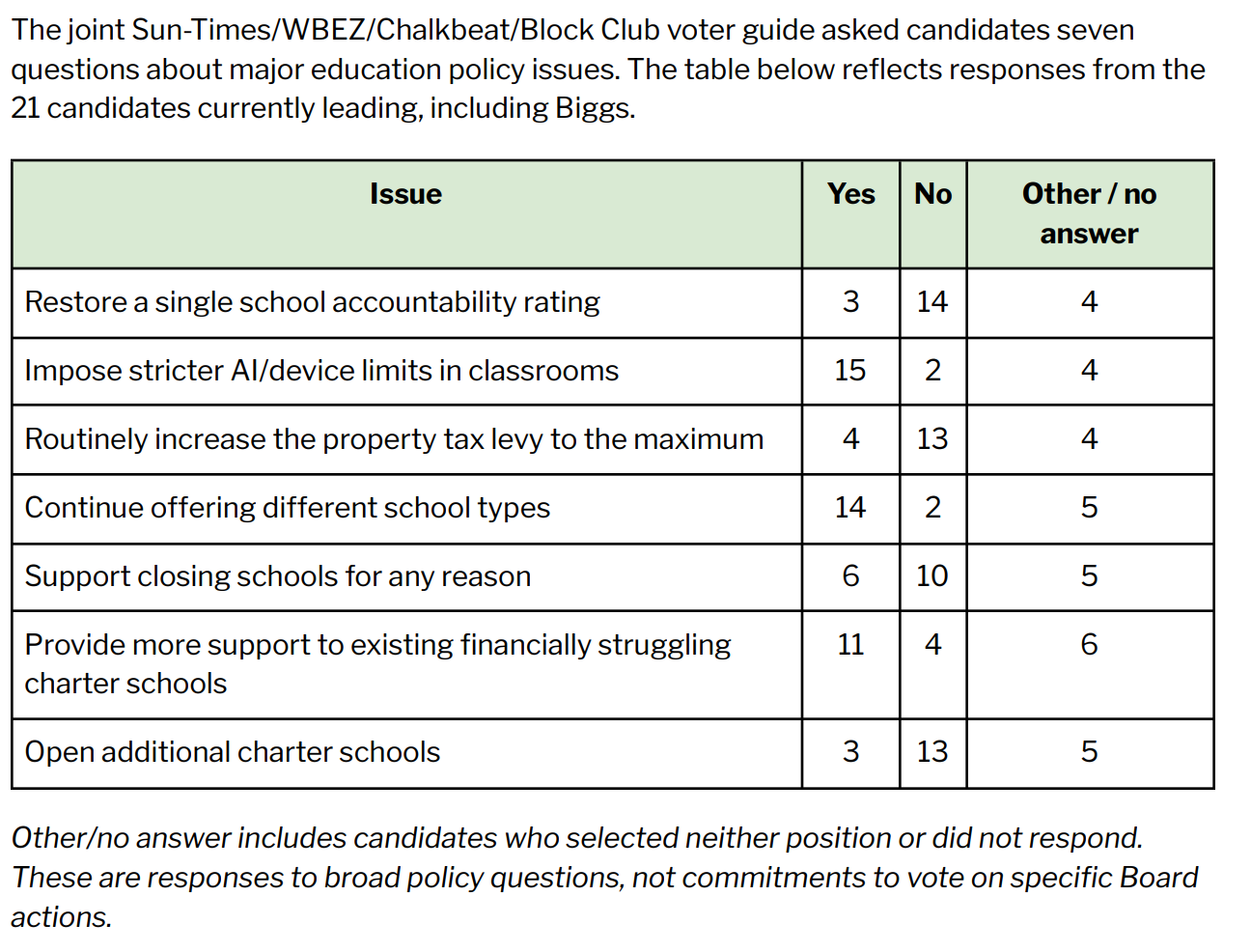
It's also important to note that most items the board considers only require a simple majority, 11 votes, to pass. Consequential items, notably budget amendments, require a higher threshold of 14 votes, a two-thirds majority.
In a LinkedIn post, Bridget Lee, executive director of the Academy for Local Leadership, urged readers to move beyond tallying groups of candidates by their backers. "Can we stop with the Chicago school board playoff score?" she asked. "This team got 10. This team got 11. No. Our kids got 21."
“I am eager to get to know all of the board members and to help them get to know one another," said school board president-elect Jessica Biggs. "I know there are many common interests that exist among this group of people. One of my jobs as board president is to suss out what those interests are. I’m eager to do that."
Biggs connected her commitment to predictable, transparent systems with her willingness to build consensus. "I also understand the power of clear systems and structures to build a climate of transparency and collegiality," she said. "I look forward to doing that, too.”
For more analysis of how the board members might align, check out:
Chalkbeat Chicago on the new alignments, potential wild cards, and more issues where a majority of members might agree.
The Chicago Tribune's recap of the race for school board president, which includes quotes from a post-election interview with Biggs.
ICYMI, Axios Chicago has the reaction and the pics of Superintendent/CEO Macquline King from Election Night.
Also, WBEZ continues to track the final results of the school board district races.
Let the Endless Campaign Begin!
Even as the Election Night excitement dies down, half the candidates will soon need to start thinking about their next campaign cycle.
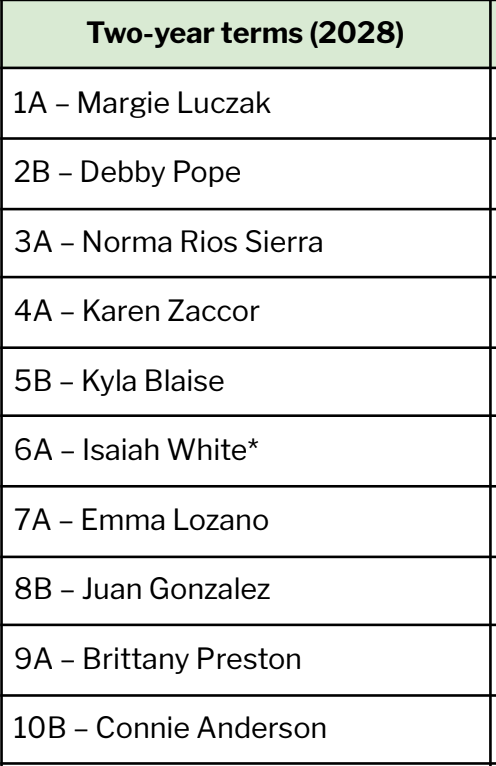
After electing all 21 seats this week, the school board now moves to staggered terms. The winners of the ten seats previously held by appointed board members will serve two-year terms. When their seats go up for election in 2028, the winners will serve four-year terms. If Isaiah White retains his current lead, CTU allies will hold six of the 2-year seats, and opponents will hold four. Newly elected president Jessica Biggs will serve a four-year term.
'Is This the Best We Could Do?'
I often heard this question about the candidate pool from people I spoke with in the later phase of the campaign. Though most people who asked me were referring specifically to the candidates for school board president, we also had two races where incumbents ran completely unopposed, and three more races where only a write-in challenged a candidate on the ballot.
"I'm still sad about who can run. You know, it's an unpaid position, and the money flowing in is also flowing to kick people out of being on the ballot," said Cassandra Kaczocha, board president of Raise Your Hand. She's also concerned that no Chicago organization explicitly focuses on training potential school board candidates in the specifics of running a campaign.
"There's IWIL in Illinois to bring women, you know, into running for things and how to run a campaign, what you need to know. But there's not something specific to Chicago to help," she noted. "There really needs to be some sort of grassroots how to run for school board."
The Academy for Local Leadership's fellowship educates education advocates, including potential candidates for school board, about the role of a school board member and issues of school board governance, but doesn't provide nuts-and-bolts training in how to run a winning campaign.
Nationally, Run for Something supports young progressives (under age 40) in local elections, including for school board.
Events
Thursday, Nov. 12: Pathways to Possibility: The State of Higher Education Summit, 9 a.m.-4 p.m., Malcolm X College, 1900 W. Jackson Blvd. Register here.
Thursday, Nov. 12: Black Student Achievement Committee, 6 p.m., Chicago Board of Education office, 42 W. Madison. Details here.
Wednesday, Nov. 18: IFT Springfield Lobby Day, 9 a.m.-2 p.m., Pasfield House, 525 S Pasfield St., Springfield, IL. Register here.
Thursday, Nov. 19: Chicagoans United for Equity presents The Future We Govern: A Political Education Lab, featuring UIC historian Elizabeth Todd-Breland and an interactive workshop, 3 p.m.-7 p.m. Register here.
By Nov. 26: Take the CPS Fall Survey! Topics include attendance boundaries, space use, the district's instructional vision for learning from PreK to second grade, and generative AI.
Comments ()