InFocus: Che "Rhymefest" Smith
Che "Rhymefest" Smith shares his vision for a student-centered school board. Plus, a text poll suggests who might win the Chicago Teachers Union's backing in a run for school board prez.
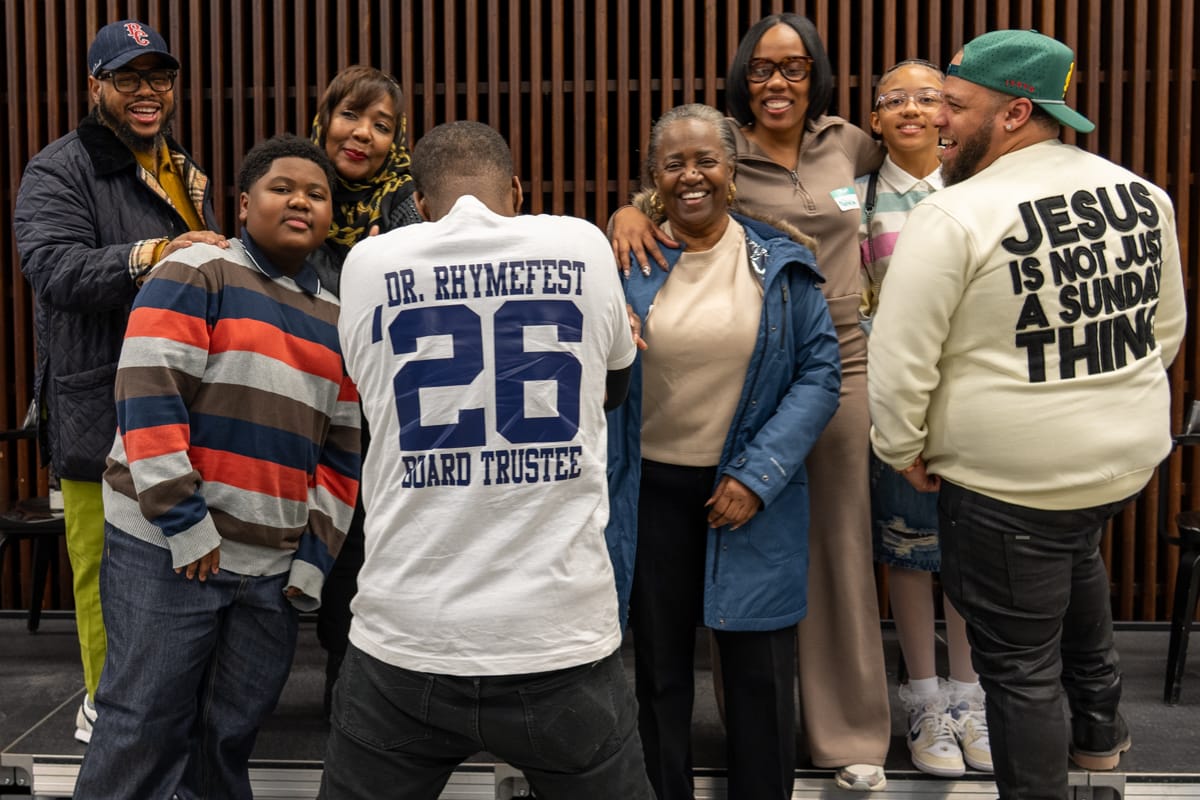
Young Che Smith was not built for the traditional school system. Board member Che "Rhymefest" Smith joined the board to build a system that works for all students, including young people like the one he was. This Q & A has been edited for length and clarity.
Q. What got you into all this in the first place?
A. You know, about 12 years ago, with the Reverend Jesse Jackson, we were doing a song together. And he said, "Your words are really, really powerful. There's only one problem with your raps."
I said, "What's the problem with my raps if the words are good?"
He said, "You're not turning them into reality. This is the future. Why don't you walk through it? You know how King and I were able to get civil rights legislation? I'll give you three rhyming words: agitate, litigate, legislate."
When he told me to agitate, litigate, legislate, he planted a seed that it's not enough to rap about it. It's not enough to make songs and sell records where I can have personal wealth about it. We have to reimagine our future. I was a student on the margins. How can I help students like me? I can reimagine it, not only through art, but through creating art in policy.
Q. What are the biggest rewards for you in this work? What's the satisfaction?
A. Watching policy move through and affect the system in a positive way. You know, in my first three months on the board, I put through a resolution that we don't need a leader to be a CEO; we need a superintendent of schools who understands how to run 612 schools, 318,000 students. I put this resolution forward, was able to gather other board members, and we passed it unanimously.
When you look at Dr. Macquline King, she is there because of that superintendent resolution. Had that not been in place, traditionally, what mayors do is appoint their chiefs of staff. Daley did it, right? [Note: Paul Vallas was Daley's budget director before becoming CEO of CPS.]
We have someone who passed a balanced budget, even going against City Hall's recommendation. I account that to the passing of our superintendent's resolution.
Q. Tell me some other things you've seen in her performance that inspire your confidence.
A. Well, I want to go back to what you just said a little bit about the budget. It's not just that. She put a budget together and said we need to stand for the students without borrowing. She did community gatherings all over the city and brought community voice to the table to help her make that decision. That's transparency that we in community have been asking for from CPS for decades. They also put together a survey of what parents and community members wanted to see in that budget. It wasn't just an opinion- or ego-driven decision. It was a data-driven decision based on what community wanted to see.
And the most important thing, doing this work, you're going to make mistakes. Mistakes will be made. Can you learn from those mistakes? I've seen Dr. Macquline King learn, and I've seen her take instruction from those who have expertise and grow from that instruction. It's very important that as leaders, we don't hit the ground knowing everything. We hit the ground learning. And I've seen Dr. King grow in this role, and I expect her to continue that growth.
Q. I'm curious, generally, how other elected officials are beginning to see what the new school board might be like. So I'm just curious, what connections have you established with electeds in the district?
A. A lot of what we do on the school board begins and ends in Springfield. So, it's important for me to have a great relationship with (state) Representative Marcus Evans, who's now putting forward a bill for board members to be paid, because of our relationship.
He sees the work that goes into it. He never knew that a school board member had to put that much work into it. And you know, he sees also that if you want the average mom or dad or plumber to be on the school board, they can't work a full-time job and be on the school board.
Q. You know, Los Angeles, for example, has paid board members who also have their own staff, and they have the power to hire that staff independently, as opposed to, like that Board Office housed in CPS. Should we be thinking about an LA model?
A. I think before I even get into the pay structure, I want to center students again. There are a few things I'd like to see. First, the majority of people who make comments at board meetings are union representatives and people with complaints. We rarely see students. I'd like to see a third of our comment section at our board member be mandatory students, whether those are students in school that comment virtually as part of a civic engagement class, or students that come to the Board Office.
We need to be making more of an effort to center the students and the type of education they want. I'd like to see voting power for our student board member. I'd like to see more than one student, board member, maybe a rotation, since it's a year-long thing, so that more students from more areas can have an opportunity. I'd like to see alternative students from alternative schools have a chance to be student board members as well as charter schools, because those are still public school students.
One of the things that I saw in LA at a recent student power summit was students have the ability to vote for their school board member at 16. When students have the ability to vote for school board members, it makes the school board members cater to the students more than to the special influences.
Number two, if we're going to [pay board members], it shouldn't only be pay. It should be health care. I would like to see pay so that the average mom or neighborhood stakeholder can hold the position without having to work a full-time job.
I would like to see a constituency services fund. If CPS were to invest in a constituency services fund for board members, it would make it easier for all board members to participate in all communities.
Who Will CTU Back for Board President?
No one knows yet, but this recent text poll suggests some possibilities:
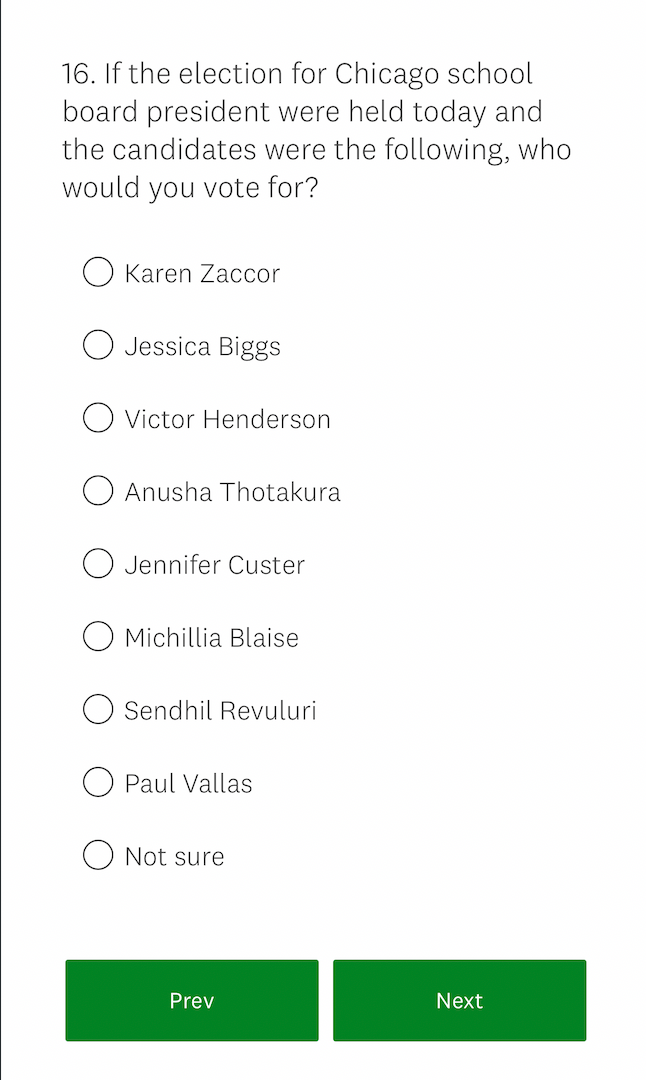
Jennifer Custer and Sendhil Revuluri have formally launched their campaigns for school board president. Victor Henderson has formed a campaign committee. Jessica Biggs is holding her campaign launch on April 16.
Three appointed board members have not declared they are running for board president, but any of them could become the Chicago Teachers Union's preferred candidate: Michilla Blaise, Anusha Thotakura, and Karen Zaccor. In 2024, Blaise launched a campaign but pulled out of the race in District 5, allowing Jitu Brown to run unopposed and win the 5A seat. She was then appointed to District 5B. Thotakura (6A) and Zaccor (4A) ran in 2024 with the support of the Chicago Teachers Union. Both lost their campaigns and then joined the board as mayoral appointees.
Seen
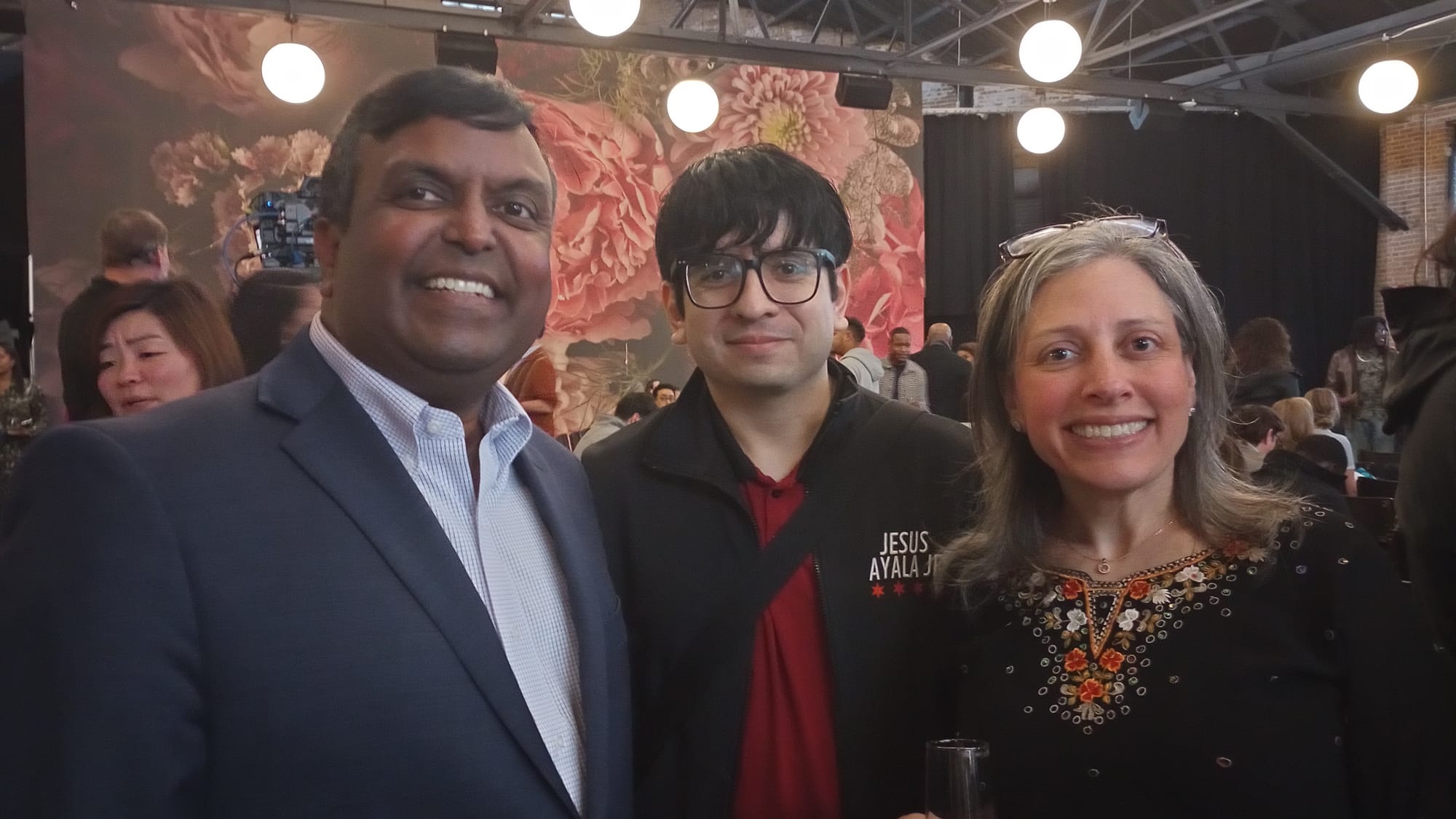
Though Board Rule did not spot any sitting board members at yesterday's launch event for A Better Chicago's State of Our Youth 2025 report, at least three candidates were in attendance: Sendhil Revuluri, who is running for board president; Jesus Ayala, Jr., running in District 7A; and Ellen Sherrat, running in District 4A.
Musical Coda
Board Member Smith pointed me to the song he created 12 years ago in collaboration with fellow rappers Common and Dlylez, and the Rev. Jesse L. Jackson, Sr. It was released three weeks ago, to honor Jackson on the day of his final homegoing celebration.
Comments ()