Parents Weigh in on Hybrid Board, Year One
Chicago Public Schools parents say the Board of Education has more work to do to be the transparent, democratic body they hope for as it moves toward fully-elected membership.
January marked the first year of a Chicago Board of Education with 10 elected members. When the hybrid board was first seated, Kids First Chicago released a report recommending steps the new board could take to increase transparency and build confidence with parents to reverse a "trust deficit."
The recommendations ranged from relatively simple measures to boost transparency by providing reader-friendly board agendas and publishing board votes online (which Chicago's City Council already does), to reallocating school district staff to support board members and creating an annual, public board evaluation. To date, the board has not acted on any of Kids First Chicago's recommendations.
I emailed Board President Sean Harden and communications manager Shelia Pegues-Porter asking whether the board had conducted a self-evaluation in 2025. I received this response:
The Board of Education of the City of Chicago (Board) held a Special Board Meeting on Wednesday, May 7, 2025. This meeting included a closed session where the Board conducted a self-evaluation with a representative from the Illinois Association of School Boards (IASB) under Open Meetings Act exemption 2(c)(16) for self-evaluation and therefore is not open to the public.
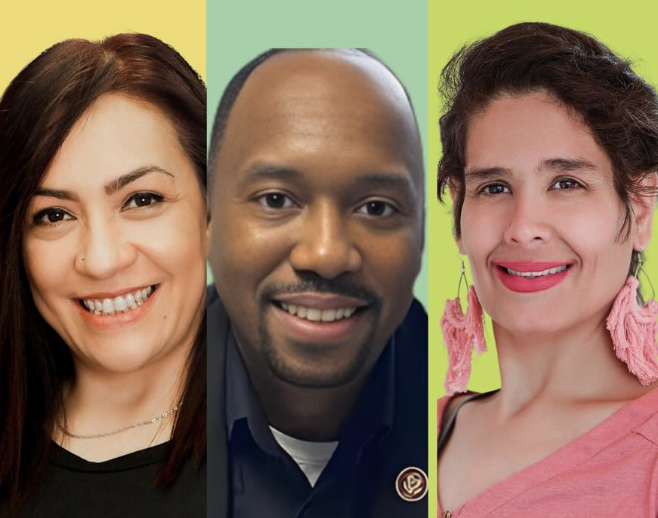
A week from today, Kids First Chicago will hold a virtual town hall reflecting on the board's first year with elected members. Board Rule had the chance to chat with four Kids First parents, including the three parents who will take part in the town hall panel, to hear their thoughts on how the first year went and what's next.
On the plus side, Austin parent Claiborne Wade has noticed more debate among board members before making decisions--a big change from the days of all-unanimous votes under fully-appointed boards. "I've seen a few push-backs and more debates around some of the issues. I'm hoping with the fully-elected school board we'll see that happen more often," he said.
But he's disappointed that the board has yet to make any of the recommended moves toward greater transparency and engagement with parents. At the same time, he recognized that "when anything gets created new...there's always some tweaks."
Northwest Side parent Melanie Lopez shares Wade's empathy for the board trying to get things done in a time when everything is new, but added, "At this point in the game, we need to start getting more communication and more traction on these things."
All the parents Board Rule spoke with agreed that better communication directly with parents about its work would be an important first step. "What's missing is the transparency that creates better communication with families," said Southwest Side parent Alma Sigala, speaking in Spanish.
Fellow Southwest Side parent Consuelo Martinez, also speaking in Spanish, put it more bluntly, "We're not seeing how we parents can ask for more transparency...there's no one answering us."
InFocus: Jennifer Custer
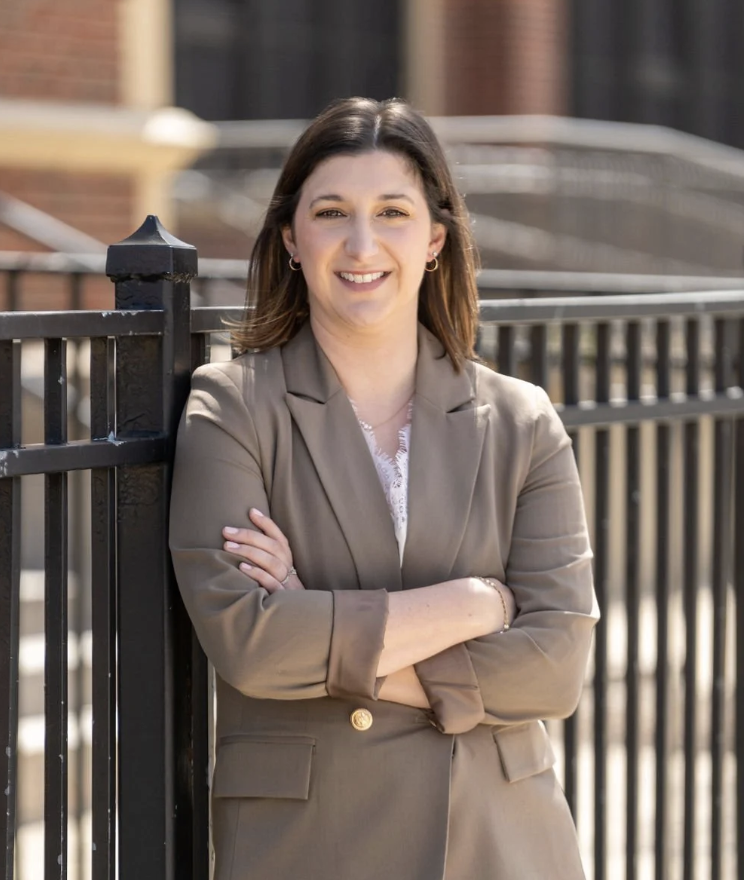
Born in Wisconsin, Jennifer Custer grew up on 65 acres, but always wanted to live in the city. She studied education at Ripon College and earned a teacher's certificate, but started her career in Illinois as a paraprofessional while ironing out some state-specific certification requirements. "Illinois needed me to do one or two things to check all the boxes," she said.
The principal in her school became a strong mentor for her. When Custer moved into a teaching role at a new school, covering a maternity leave, it happened that her principal-mentor moved into leadership of that building. Custer credits her mentor with exposing her to many different teacher leadership roles.
Before moving into administration, Custer served as union president in her school district, working closely with the school board as well as handling contract negotiations. "I've really done a whole lot of different roles and seen how all those different cogs in the wheel work," she said.
For Custer, the board's signature accomplishment in 2025 was passing a budget without including a loan. "We worked really hard to make sure that we were closing the budget gaps and passing a budget in a responsible way that tried to set us up for some continued financial success in the future," she said. Making that happen again won't be easy, especially with the board's first full election season coming up.
She describes traffic to her office hours as "slow but steady." Constituents come to her most frequently to talk about issues with their Local School Councils and questions about the process to access special education services for their children. During budget season, constituents came to her with questions about district and school finances.
When it comes to charter renewal terms, she says, "We're trying to find a happy medium that everyone can live with on how we are putting them through the renewal process." The challenge is to balance the need to hold charter schools accountable for improvement while recognizing that change in any school usually takes more than one or two years. "I don't know that any of us anticipated this was going to be something that we spent a lot of our time and energy and focus on."
Priorities. Custer's top priorities are: strengthening the school district's finances by reducing debt service, early literacy, and career and technical education. As a former teacher and assistant principal, she likes to dig into curriculum and teacher development. "What kind of curriculum are we using? What professional development are teachers getting to strengthen those academic outcomes for our kids?"
Soundbite. "I think the board is still struggling with what a school board is and how it works, how it functions. This is a very fledgling thing that we have in Chicago, and not something we have a lot of experience with," Custer said."The public has to be a little bit patient with us, which I think is a challenge. There's a lot of spotlight on the board as we navigate this new territory."
News Bites
Black Student Achievement Committee. The Board of Education has reopened the application to join the Black Student Achievement Committee. The application is open until Monday, February 9, at 5 p.m. Current students are invited to apply, along with parents, community, alumni, and labor partners.
Early childhood. A new state agency is being created to pull all of Illinois' early childhood programs under one administrative roof. The new Illinois Department of Early Childhood will face steep hurdles in its efforts to ensure Illinois families can easily access home visiting, early intervention, child care, and preschool.
Federal tax-credit scholarships. In July, the federal government established the Education Freedom Tax Credit, through which states can opt into a tax-credit scholarship program similar to Illinois' Invest in Kids effort, which ended in the 2023-24 school year. In late January, Illinois Families for Public Schools delivered a letter to Gov. J.B. Pritzker signed by 46 advocacy and labor groups telling him to opt out of the program. It seems unlikely the program will get traction in Illinois, but blue state Colorado is going all in. A Colorado-based former colleague of mine explains the public education case for the program in two Substack posts.
Comments ()