Under the Radar: Budget Clawback and Charter Renewals
While all eyes are focused on the fight over May Day, important changes in school-level finances for the rest of the year have been happening under the radar.
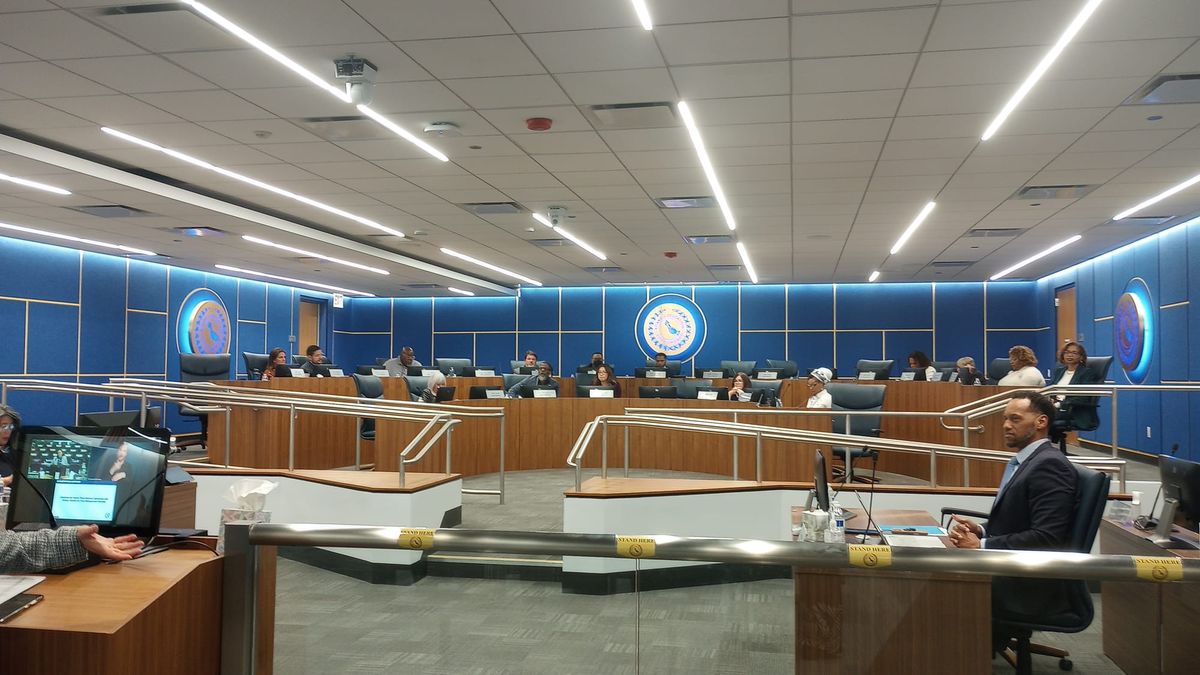
Traditional and social media were chock-full of news from the Chicago Board of Education and Chicago Public Schools this week: a new board vice president, the resolution against federal tax-credit scholarships, and the wrangling over May Day, to name a few. Later in this newsletter, Board Rule will round up coverage so you can catch up on whatever you’d like.
But first, Board Rule has the news you haven’t heard yet.
Did CPS Just Claw Back Funds from Schools?
This week, two principals confirmed to Board Rule that CPS shifted the date by which schools have to spend their money for the current school year to Tuesday, April 7. In previous years, that date has usually been set for late May. Principals were notified of the change in March. Still, the principals Board Rule spoke with said that less-experienced principals might have been caught unawares or had difficulty predicting their expenses through June.
Unspent funds return to CPS central office.
School Board Majority Proposes Tightening Charter Renewals
Board Rule has obtained a February letter suggesting changes to the school district’s proposed new rubric for charter renewals, signed by 13 board members: Ed Bannon, Olga Bautista, Michilla Blaise, Jitu Brown, Ebony DeBerry, Yesenia Lopez, Emma Lozano, Debby Pope, Norma Rios-Sierra, Anusha Thotakura, Angel Velez, Cydney Wallace and Karen Zaccor.
Here are the key changes they requested:
No 10-year renewals. “Too much can change in that amount of time–enrollment could plummet, poor financial decisions can be made, and leadership can turn over.”
Increased weight on finances. The 13 board members recommend weighting the financial rubrics at 35% rather than the current 30%. “Finances are where schools are quite literally failing school communities and falling apart.” The letter cites financial problems at ASPIRA, EPIC, Passages, and Urban Prep.
Stricter academic requirements. All charters rated less than exemplary by the state should be assessed for academics, culture and climate, and special education. Charters rated commendable by the state must also be rated proficient during the school district’s annual site visit in order to achieve a “meets” rating on the academic rubric. The letter adds: “For context, in last year’s renewals, 11 out of 12 schools with an academic site visit were rated basic or unsatisfactory.” The letter also recommends tweaking the weights for academics to increase the weight for special education metrics, and prioritize metrics that show their ability to deliver services required in IEP/504 plans. To better serve English learners, the board recommends that charters require teachers to obtain an endorsement in English as a Second Language within a defined time frame and reimburse tuition.
Conditions for an automatic 2-year renewal. The letter argues these should include, at a minimum: operators failing to have “appropriate” cash on hand, operators refusing to sign their contract with CPS (a bill in the state legislature also addresses this issue), and providing inaccurate or false financial data and projections.
Board Rule spoke with Debby Pope before obtaining this letter. During our conversation, Pope explained her thinking about problems with charter schools’ own enrollment projections. “Charter enrollment has been either flat or declining in most situations, and yet [charters] have been allowed to predict rosier enrollments. … I think we’re going to move toward a more accountable system, such as the one the district has, with 20th day enrollment statistics from the previous year, some kind of actual model, rather than an aspirational goal of attendance.”
Pope also noted there has been "some back-and-forth" with the Office of Innovation and Incubation, which handles charter renewals, including discussion of adding a "mid-point evaluation, rather than you just get a good renewal or you don't get a good renewal."
Board Rule will provide the full Q & A with Pope to paid subscribers early next week.
ICYMI: This Week’s News Roundup
Here’s a one-stop shop for news on this week’s top issues related to the board and CPS.
Board opposes tax-credit scholarships. After intense debate, 15 board members voted to pass a resolution expressing their opposition to a federal tax-credit scholarship program enacted last summer. Three members abstained. WBEZ has a solid story that includes key quotes from the board's discussion.
New school board vice president. At Wednesday’s agenda review committee meeting, Angel Velez and Yesenia Lopez were both nominated as vice president. Velez won the spot in a 9-7 vote. Chalkbeat Chicago gives context.
School on May Day? CTU says they successfully bargained for a day of civic action on May 1. Late yesterday, Superintendent/CEO Macquline King sent a letter to parents reiterating that school will be open May 1. But a majority of board members support the CTU’s proposal for a self-directed teacher professional day, when students do not attend school. Chalkbeat Chicago's piece, published at 6 p.m. Thursday, gave a good overview of this developing story.
She’s back! Stacy Davis Gates has returned from medical leave. In an interview with WGN, she mentioned the upcoming school board elections, saying, “We think ballot access in [school board races] should be plentiful. We believe that people from every community, every neighborhood, every side of town, should stand up and be counted.”
She also pledged CTU support for candidates seeking to get on the ballot, saying, “We are looking to provide support for the ultimate ballot access. We will be hosting, in conjunction with a lot of community led organizations, opportunities for candidates to get petitions drawn up by lawyers to make sure that they get a stamp from a registrar.”
When asked about whether CTU’s “brand” is viewed too unfavorably to win elections, Gates responded, “The Chicago Teachers Union isn't a political party, it is a labor union.” She went on to note that there were plenty of lost elections on the way to making the Chicago Board of Education a fully-elected body, as it will be in November. “If this was just a win-loss record, we would have given up on it, but because it is about moving the political agenda toward a more inclusive space, we keep playing.”
Comments ()