Meet Aaron 'Jitu' Brown, Candidate for 5A
Incumbent Brown, an education organizer and activist, says the board is doing well, but the work of justice is far from done.
By Isaiah Pinzino
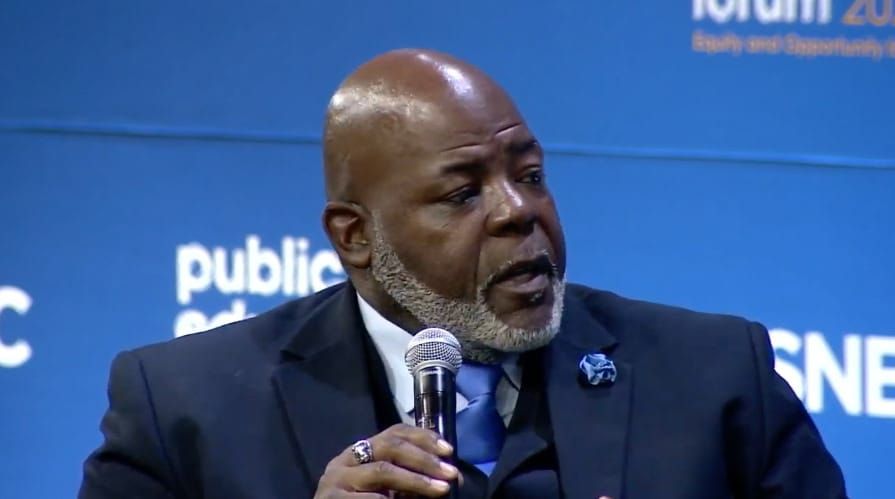
District 5A representative Aaron “Jitu” Brown spent time as a college football player, a journalist in the Army, a rap artist, an African-American history teacher, an activist and an education advocate before he was elected to the CPS School Board in 2024.
Brown was born on the far south side of Chicago and attended Kenwood Academy High School He is arguably best known for his work with the Journey for Justice Alliance and the Kenwood-Oakland Community Organization, where he’s been the national director and community organizer, respectively, for decades.
The incumbent ran unopposed in the 2024 election, backed by the Chicago Teachers Union, as well as Alds. Jason Ervin (28th), Chris Taliaferro (29th), Byron Sigcho-Lopez (25th) and Jeanette Taylor (20th). He was also endorsed by the Network for Public Education Action. He served on the national group's board for a decade.
He was among the 22 candidates caught up in this summer's "dual-circulation" petition challenges, but made it through. Now confirmed for the November ballot, Brown faces LaPamela Williams. As of July 15, he has raised a little more than $6,200, campaign finance records show.
“I think I bring a long history of … qualitative evidence of the public, evidence of the power of how to improve schools when the community is engaged respectfully,” Brown said. “And then also the impact of policies that exclude the voices of the community.”
He added that the view from the board table looks different than the view from the grassroots.
“I've learned just how deep the bureaucracy is being a board member,” Brown said. “I haven't felt the benefit of, I guess, someone would say, being an insider. I do have access to the superintendent, I have access to board members, I have access to CPS staff, and I think that's a good thing. But navigating the bureaucracy is very different.”
Now, he’s co-chairing the Black Student Achievement Committee, designed to analyze barriers to equitable education opportunities and to make recommendations to close those gaps. So far, 10 of 14 members have been onboarded, and Brown said the first BSAC meeting will convene with all members before the next school year begins.
One of the committee's central goals is what Brown calls “study tools,” or investigations into what works to build strong schools for Black students. He points to Kenwood Academy as one of the strongest examples.
“Kenwood is a neighborhood school with a magnet component, and it's been a top-20 school for 50 years, right?” Brown said. “The question you have to ask yourself is ‘why hasn't that model been replicated?’”
Securing equitable opportunities for Black students has been the common thread between Brown’s activism and his time on the board. He said that the charter industry and divestment from predominantly Black neighborhoods have contributed to educational inequality across the city.
“The fact that the basic quality of life institutions in some communities are sabotaged on purpose, intentionally, is something that I will not let this board or CPS get away forgetting, or take off the radar, because if you can't start there, you'll never start with real solutions,” Brown said.
Still, he said the board is moving in the right direction, and that the board’s initiatives to enforce regulations on the charter industry and hold charter operators accountable have been successful.
“We're developing sort of the methodology to be able to bring to stabilize the district, right, to stabilize the district and make sure that if the charter struggles, if charter operators try to leave, they can't leave with the money.”
Brown said that if he’s re-elected, he’ll continue pursuing the priorities he’s focused on this term.
His Priorities:
- Fixing the structural funding deficit for funding Illinois schools.
- Investing in neighborhood schools by making Chicago a sustainable community school district.
- Strengthening and empowering Local School Councils.
- Increasing the number of Black teachers.
A Look at His Voting Record:
Interim CEO selection
Brown voted with 10 mayoral appointees to confirm Macquline King as interim CEO, while eight other elected members voted no (Ebony DeBerry abstained but said she'd have voted no). This vote split largely along elected-vs-appointed lines, with Brown's “yes” vote being an exception among elected members.
Charter schools
Brown has a long public record opposing charter expansion, but his votes didn’t always reflect his rhetoric:
- He voted for a resolution to tighten oversight on charter schools.
- He also voted to renew a slate of charter schools this spring.
- He's been candid about this tension: "I have to get over my disdain for the charter industry," Brown said. "I went to a few charter schools that were clearly schools that were doing the right thing, and I will support those schools, because at the end of the day [I ask], are you doing right by children?"
Budget and finances
On the high-interest loan Mayor Johnson floated to cover CPS's deficit that triggered the whole board's earlier resignation and Pedro Martinez's ouster, Brown signaled support if it meant protecting resources for "Black and brown schools" rather than making cuts there.
Federal school choice resolution
He voted for and defended the board's resolution denouncing the Trump administration's tax-credit scholarship program for private schools.
Soundbite: “We're going to call out the uncomfortable truth that some people are too cowardly to call out, because whoever writes their check tells them they can't say it.”


Comments ()