New Push to Extend the Closure Moratorium, Plus Board Meeting Recap
The push is on to extend the Chicago school board's moratorium on closing schools. Plus, will advocates turn to the Illinois AG to get the Black Student Achievement Committee moving?
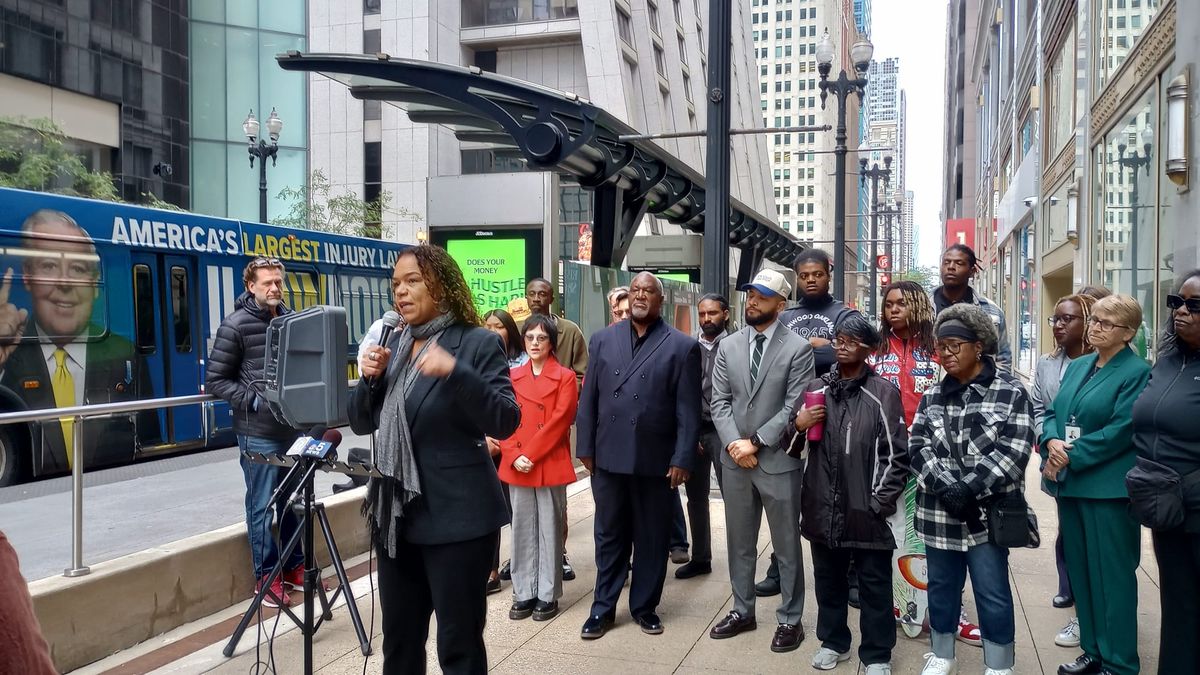
As has been widely reported, Chicago Public Schools enrollment has dropped by about 11,500 from this time last year. Before yesterday's board meeting, a group of about 15 people, including Board Members Michilla Blaise (5b), Karen Zaccor (4a), and candidate for board president Hilario Dominguez, held a press conference calling on the board to extend the current moratorium on school closures, which expires in January.
Shannon Bennett, executive director of the Kenwood Oakland Community Organization, announced his organization would be asking all the candidates for school board to sign a pledge promising not to close any schools. He argued that some candidates are offering "mealy-mouthed stuff about why school closings should be on the table."
After Questions from Advocates, Board Revises Its Schedule of Black Student Advisory Committee Meetings
The board has delayed the start of all its standing committees for the entirety of its existence, which now approaches two years. As this board's term winds down, it now appears the committees are finally winding themselves up to get started. But the Black Student Achievement Committee, the only committee required to exist by state law, will be the last to launch.
At yesterday's meeting, Board President Sean Harden announced the Black Student Achievement Committee will hold its first meeting on November 14. [Note: That meeting date was updated this morning, to November 12. See below.]
Meanwhile, the committees the board proposed shortly after taking office--Student Success, Operations, and Finance & Audit--will meet for the first time on October 8. The Special Education Advisory Committee will hold its first meeting on October 15.
During public comment, Dwayne Truss, former school board member and longtime Austin community activist, called on the board "to fully operationalize the Black Student Achievement Committee on par with its other standing committees." Unlike all the other board committees, the Black Student Achievement Committee is required by state law, not just board bylaws.
Instead, the board appears to be equating the Black Student Achievement Committee with its Special Education Advisory Committee. As of today, neither of these committees has a place on the official planning calendar. [See below for full update.] The board update released this morning says these meetings will occur every other month, while the standing committees of the bylaws will meet monthly.
"Please don't put us in a situation where we have to file a complaint with the Illinois Attorney General because of non-compliance with the state law," Truss said.
Today, the board announced that a special board meeting will be held next week, on September 29 at 9:30 a.m. at 42 W. Madison, in part to announce the schedule of meetings for the Special Education Advisory Committee and the Black Student Achievement Committee. There will also be a closed session. Public participation slots are available.
According to the communication published today, the Black Student Achievement Committee will meet at 6 p.m. on November 12. Special Education Advisory Committee will meet at 10:30 a.m. on October 15. Both meeting will be held
Every New School Year, Special Education Teachers--And Students--Get the Shaft
During public participation yesterday, Jones science teacher Peter Podlipni talked about the longstanding problems with special education staffing from one year to the next. He pointed out that central office budgets for high schools always underestimate the number of special education teachers that will be needed the following year.
The projected budget "takes into account the graduating seniors" and removes the total special education staffing needs for those students, "but it does not take into account the incoming freshmen." Without estimating the special education services of the incoming freshmen class, these projected budgets always fall short of actual service needs.
"Each year, many schools must lay off their least senior special education teachers," said Podlipni. Schools then appeal over the summer to restore special educator positions. But rehiring can take well into the school year--as Podlipni says happened at Jones this year, when positions were restored at the end of the fourth week of classes. "Stop laying off special education teachers every year in June," he urged the board. "It does more damage than it saves money." Podlipni sent a follow-up email to Board Member Michilla Blaise (5b) that suggests Jones Principal Kelly Dolan may not have filed an appeal to restore the positions until late August, saying, "Employed SPED staff at my school were contacted by our admin the week of August 21 to provide info/data to complete the appeal paperwork." The appeals process opened July 2.
The situation presented at yesterday's board meeting illustrates two problems: whether a principal is nimble enough to navigate the existing budgeting/hiring system for special educators, and the larger question of whether this system actually serves students. Is this a funding issue, a systems issue, or a broader lack of vision? Board Rule will continue reporting on this issue.
Comments ()