CPS Board Weighs Ban on Candidates Taking Vendor Cash
Today's agenda also includes a one-year funding fix for ChiArts and a teacher mental health framework — plus the looming budget
The agenda for today's agenda review committee went live Monday, and a number of pressing items are up for the board to resolve. Chief among them: the budget. It’s unclear how much will be discussed — much less resolved — because there’s only a placeholder for it in the agenda.
We do know that the board has proposed $1.65 billion (that’s a capital B) in short-term borrowing as they wait for delayed property tax revenue (also called tax anticipation notes) to come in. The delivery of the second installment of property taxes to taxing bodies, including CPS, is officially delayed by two months, to October. The school district relies heavily on the second-installment tax payments, and without them, is forced to resort to short-term borrowing. The question: How much is ultimately needed?
In 2024, a four-month hold-up of this revenue cost the district $33 million in borrowing, records show.
Let’s inspect other noteworthy items up for discussion from the school board.
ChiArts resolution. This is an issue that brought ample public comment at the last meeting. CPS has agreed to bring the former contract school under district management to save it from closure. However, a sticking point has been paying for the "teaching artists," professional artists who work part-time and are not CTU members.
The board's proposed resolution would restore funding for these instructors for one year and direct CPS officials to make "all reasonable efforts" to retain the current ChiArts staff.
But it’s a temporary relief. The district says maintaining the cadre of teaching artists is too expensive, and it is reviewing a different staffing model. The change would gut the school's mission of providing pre-professional, conservatory-level training in the arts, say the parents, teachers and students.
Campaign Donations from CPS Vendors. Another unheard-of problem in CPS — sitting board members are now running for office. So what does that mean when a vendor with a contract of $10,000 or over donates to a candidate's campaign — a contribution that's legal up to $1,500 under Chicago's ethics ordinance, a limit CPS's own Code of Ethics requires the district to monitor and disclose?
A resolution from President Sean Harden, the only current board member not running for re-election, seeks to bar board member candidates from accepting campaign donations from CPS vendors, prospective vendors, or the board's outside counsel going forward.
CPS's existing Code of Ethics already touches on vendor donations, but only through disclosure — it requires the district to track and report vendors so candidates can check compliance with the city's $1,500 cap. The resolution goes further, proposing to ban those donations outright rather than just monitor them.
Here's the solution the resolution proposes for donations already accepted before adoption: “That in the event a Board Member Candidate accepted a donation from a vendor prior to adoption of this resolution, that the Board Member Candidate either recuse themselves from voting or return the donation."
This leaves a few questions:
- Why take the form of a resolution rather than a policy?
- Recusal from voting risks a sub-quorum of voting members, thereby impeding the Board's ability to execute on one of its primary responsibilities to Chicago Public Schools.
Stay tuned.
Mental health. The resolution to design a mental health framework for teachers is high on Wednesday’s agenda, after Harden’s unexplained and awkward pull of it from the board’s June meeting. The agenda-pull strategy is used when the president doesn’t believe certain items will be passed by the board members present. In the past, it wasn’t such a public event because the district and board were more tightly aligned on issues that would be brought before the board.
Board members Jessica Biggs and Jitu Brown, among others, complained publicly during the meeting about its last-minute disappearance.
The resolution was championed by Educators for Excellence in Chicago, a teacher advocacy group that has pushed the board to adopt a districtwide mental health strategy. The proposed “Be Well Employee Wellness Program” would require CPS to build lasting, district-level systems for supporting educator mental health, including developing mental health resource guides, offering professional learning focused on educator well-being and educating staff about their benefits options.
Other noteworthy points include:
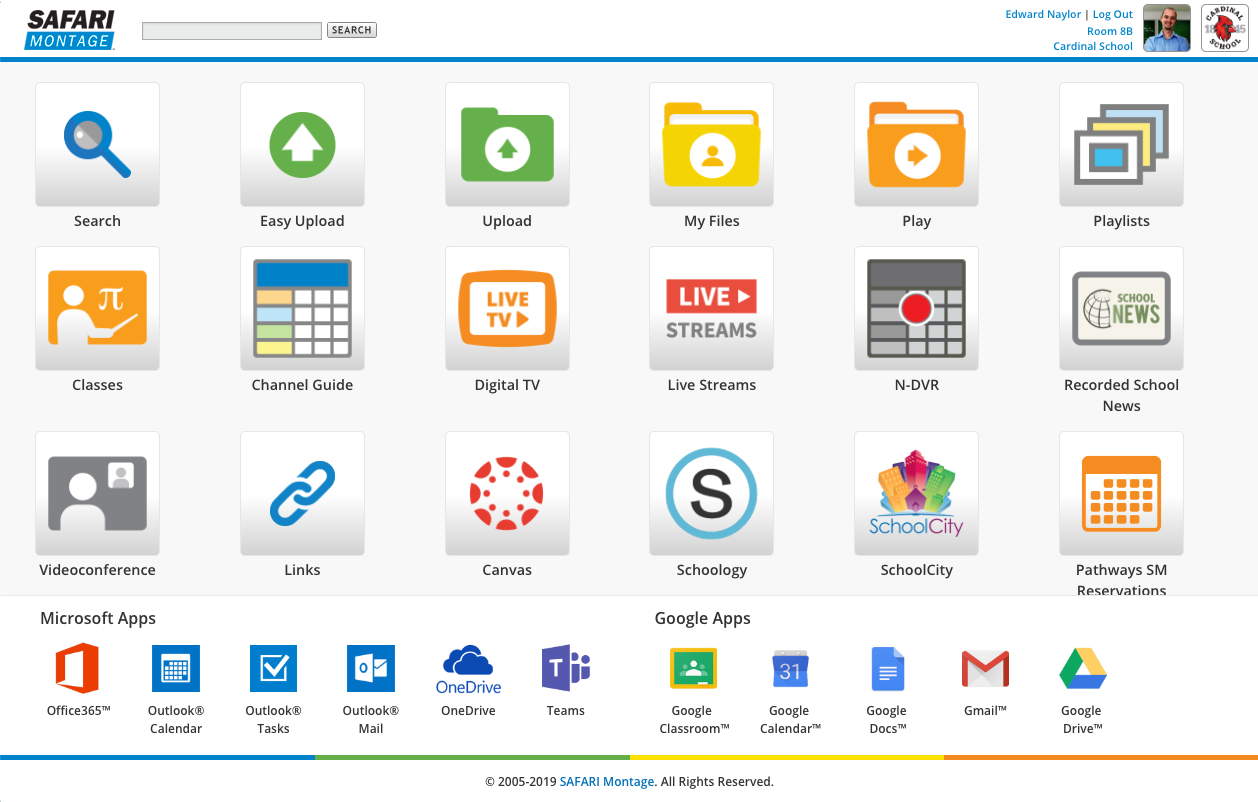
- Safari Montage. The service houses all materials for CPS's Skyline curriculum — a hotly contested initiative dating back to former superintendent Janice Jackson's push for a unified curriculum across all CPS schools. The contract had already faced earlier delays, putting continued access to the curriculum at risk.
- Saga math tutoring. 1800 students across several high schools are receiving tutoring from the high-impact tutoring service. UChicago Education Lab, a longtime partner of the tutoring nonprofit, has released favorable studies of its impact, particularly in math.
Editor's note: A story that ran here July 1 has been updated to clarify that incumbent Karen Zaccor, who is running for election, is the only board member with post-pandemic teaching experience in Chicago Public Schools. Board members Carlos Rivas and Anusha Thotakura both taught during or after the pandemic, but not within the school district.
People
Angel Velez did not survive his petition challenges. Because he was short of the 500 votes he needed, he was booted from the ballot, defaulting to his opponent, Brittany Preston, the de facto 9A winner. He posted a video to Instagram, calling it “undemocratic.”
Candidates Jitu Brown (5A) and Katherine Dunneback (9B) will be on the ballot after officially overcoming their challenges.
Job moves
A few appointments of interest: The Chicago Education Alliance has appointed Femi Skanes as its Director of Community Engagement. The former CPS principal joins the new nonprofit founded by former CPS COO, Arnie Rivera, after founding an educational consulting company herself called Leadership EDGE, LLC.
And Lazaro Lopez joins the Education Systems Center at NIU as their Senior Director of Pathways.
Candidate Events
Yesenia Lopez: Historias sin Fronteras/Stories Without Borders iSER Wellness Fundraiser, 6:30-9:30 p.m., Thurs., July 9, Pour Decisions Chicago, 2624 N. Lincoln Ave.
Anusha Thotakura: Canvass, 10 a.m., Sat., July 11. Holstein Park. Sign up here.
Claudia Peralta: World Cup Final Fundraiser, 1- 2 p.m., Sunday, July 19. Eris Brewery & Cider House, 4240 W. Irving Park Rd. Sign up here.
Jason Dónes: Meet-and-Greet Event, 12-1:30 p.m., Sat., July 25, Location TBD. Sign up here.
Juan Ignacio Gonzalez: Community Conversation, 6-9 p.m., Wed., July 30, South Side Social, Effortless Look, HQ, 4432 S. Ashland Ave.
Candidates: To have your July events listed in a future newsletter, please email your information to norahdcruze@u.northwestern.edu.
Jobs
CPS is still seeking candidates for several specialist and anticipated school assistant positions. Some unique opportunities include community relations rep and restorative justice coordinator. Openings are rapidly closing, so apply soon.
OP-ED: CPS Has an AI Guidebook. Now It Needs to Know Whether It Works
By Vírning Nataniel Moizinho Fernandes de Oliveira
Artificial intelligence is already in Chicago classrooms. Students are using chatbots for schoolwork. Teachers are experimenting with AI for instruction. Vendors are building AI into educational tools. What comes next matters.
In a district that serves more than 316,000 students, AI policy cannot be left to individual teacher discretion, vendor promises or panic over cheating. Chicago Public Schools has taken a first step with its AI Guidebook, but a guidebook is not an accountability system. The question is whether CPS can tell if its rules are protecting students, supporting teachers and improving learning.
The district’s next step should be practical: CPS needs an AI accountability system that tracks implementation, literacy, privacy and equity without turning schools into surveillance sites. It should answer basic questions: Which schools are using approved tools? Which educators have received training? How are integrity concerns handled? Are English learners, students with disabilities, or Black and Latino students being flagged at disproportionate rates? Who is responsible when privacy rules are violated?
The need is urgent. AI is moving faster than the evidence. A Stanford SCALE review identified more than 800 K-12 AI papers, but only 20 that rigorously proved results. Pew Research Center reported that 54% of U.S. teens have used chatbots for schoolwork. Prohibition alone is not a serious policy.
The risk is that schools respond mainly through detection tools, discipline and suspicion. CPS warns that AI-detection tools are “not foolproof” and may disproportionately flag English learners. CPS should collect data on integrity cases, appeals and false-positive concerns while helping teachers use process-based writing, in-class drafting, student conferences, AI-use disclosure statements and assignments requiring local or course-specific thinking.
Privacy requires the same clarity. AI tools can collect prompts, student writing, identifiers, images, and other sensitive information. CPS already requires approved tools and vendor vetting, but rules only matter if someone enforces them. New York offers one useful model: educational agencies must designate a Data Protection Officer. CPS also should designate an AI privacy and data governance officer to review vendor contracts, maintain tool lists, investigate incidents and report risks.
Finally, CPS should create an AI Implementation and Equity Council with teachers, students, families, school leaders, privacy staff and community experts. The council should review data, advise district leadership and the Board, and make sure AI policy leads to decisions, not just documents.
CPS has taken the first step by writing an AI guidebook. Now it should take the harder step: building the system that tells us whether the guidebook is working.
Vírning Moizinho is a doctoral student in curriculum, culture and communities at Loyola University Chicago. A multilingual educator and Fulbright Brazil consultant, Moizinho’s work focuses on equity-centered education, culturally sustaining pedagogy, AI in education and Global South educational contexts.
Comments ()