Tell Me What Board Governance Looks Like
Last week's board meeting underscored differences among board members about what their job is and how to govern Chicago Public Schools.
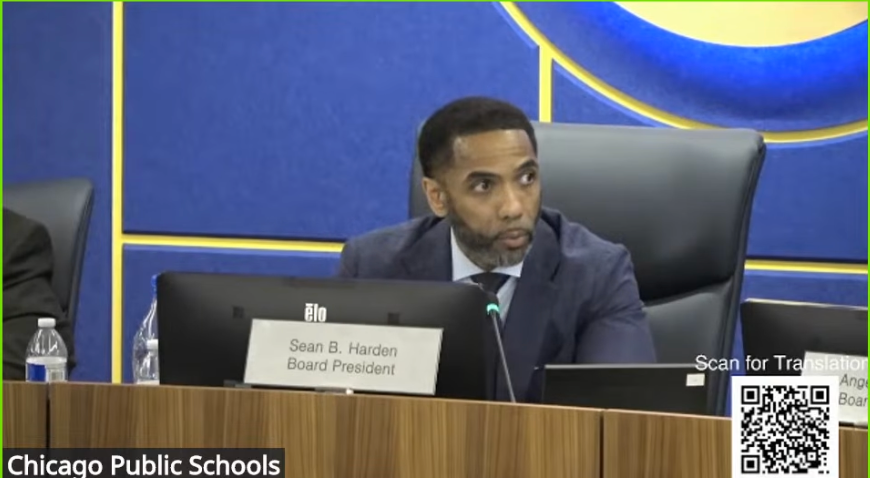
Last week's fiery floor debate wasn't just about how to handle charter renewals. It also presented two distinct visions for how the school board should do its work.
In the view of the majority of board members, their job is twofold. As the governing body for the Chicago Public Schools, in its role as a charter authorizer, the board must ensure greater stability in charter schools by keeping closer tabs on them, especially their enrollment projections and finances.
More broadly, board members say they are finding themselves with few levers to push the bureaucracy to become more nimble and transparent. At last Thursday's meeting, board members expressed frustration that CPS central office staff weren't providing full details on the new oversight process quickly enough, and they weren't getting answers without holding up the renewals themselves.
"There is a pattern in which we continue to get limited information too close to the time we are being asked to vote to get all of our questions answered," said Board Member Karen Zaccor (4A). "We have asked for that to change also. We are not here to be a rubber stamp, so that's why I'm advocating that we do not move forward on this or the other charter renewals until we get complete answers to all of our questions."
A substantial minority of board members view their job differently. They see their job as setting overall goals and creating policy, while leaving the details to the superintendent and her team. "Our job is to govern," said Board Member Jennifer Custer (1B). It is not to visit schools and come back with critiques and rate schools and say what they're doing well and what they're not doing well. ... Our job is to make sure that the operations of this district continue, and actions like this do not do that. ... We continue to shy away from acts that are governance, and we continue to do things that are either political in nature or, in this case, management in nature."
In an interview on Monday, Zaccor said, "I don’t feel like we stepped into management. All we’ve really done is say, come back and give us something better." She's convinced it's necessary to hold the renewals until the renewal process is locked down, especially the proposal to create a mid-cycle financial review. "We have a responsibility to students, and not spending money we don't have when charters go under."
Many local board watchers would like to see the conversation about effective board governance zoom out to encompass goal setting and regular check-ins about progress toward goals in the current 5-year strategic plan. Sendhil Revuluri, who served as the board's vice president during the Lightfoot administration and is now running for board president, summed up their view: "Chicago's students and families deserve focus and advance planning that supports their success."
The Academy for Local Leadership, a nonpartisan organization that trains aspiring education advocates, community leaders and Chicago board members on best practices in board governance, is developing a framework for good board governance.
But Jeff Henig, professor emeritus of political science and education at Teachers College, Columbia University, called the push to separate governance and management "idealized." The vision for a democratic board that sets policy and then hands implementation off to an expert superintendent and team of managers has its roots in the Progressive Era, when bureaucratic civil service was intended to replace nepotism and machine politics.
Henig acknowledged the importance of creating "some kind of rules of thumb, some norms of operating that will keep them from micromanaging everything." Without those, "it'll be chaotic." But it's hard to develop those norms in a highly polarized climate.
Discussions like these can go one of two ways, said Henig. "You can have a healthy struggle that clarifies the issues, raises debate, and comes up with solutions. Or you can have a continual churning of issues that never get resolved and just lead to frayed nerves and frayed relationships and loss of trust. When that happens, no one's really happy."
InFocus: Michilla "Kyla" Blaise
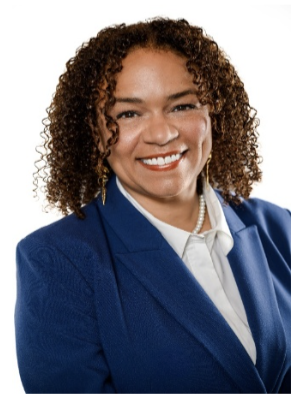
The daughter of an Englishwoman and a third-generation West Sider, Board Member Michilla Blaise sees repping her hood as a top priority. “Whenever there’s budget issues, people want to close schools,” she said. “I thought I could be a really strong voice to advocate for our schools to remain intact.” As the mom of two teenagers who leave the West Side daily to attend high school, “I realize we have some work to do restoring confidence in a system that has failed generations of West Siders.” Currently, she said, 84% of West Side high schoolers, like her daughters, leave the neighborhood to attend school elsewhere in the city.
Blaise spoke with Board Rule about the state of the school board and her goal to increase enrollment at Marshall High School.
This interview has been edited for length and clarity.
What’s working. I’m glad we landed a budget, even though I didn’t support that one, with limited cuts to the classroom. We’ve got all the members of the Black Student Success Committee who are being vetted right now. Moving that forward is huge. When I first got here [as a member of the city’s last fully appointed board, created in October 2024] just making sure the Acero schools weren’t closed was tremendous. Watching that process and talking with [the Office of Innovation and Incubation about] how we transition those schools to CPS schools. I’m proud of the teacher contract we landed, and I’m proud that I’m working on getting the lunchroom workers paid adequately.
What needs work. Now that we have a CEO, I think hopefully we can push into committees. Once we get our committees set up, the [finance] committee can look into those contracts really closely. They can bring forth their understanding. Maybe that will even shorten the [meeting] time. Our meetings are inordinately long, because they're talking to everyone about everything.
Marshall High School. There were 5,000 students when my dad went there, and there’s, I think 163 students at Marshall right now. It doesn’t appear that has sounded any alarms anywhere. It’s in this spiral of having so few students that other kids don’t want to go there. I’m hoping I can bring attention to the issue and help CPS understand that they need to invest in these underenrolled schools. Marshall is a historic landmark in Chicago; it can’t be torn down. I’ve talked to the alumni association; I’ve talked to the principal. Everybody’s really interested in the success of Marshall, and I think we can do something about it.
On charters. I’m often painted as the CTU person, because I was appointed, but my district has the most charter schools of any of the subdistricts. The West Side, particularly the 27th ward, has the most charter schools in the city, and they've been there 25, 20, 15 years. They're part of the community, and so doing what I can to stabilize them is important to me as well.
Fun Fact. Blaise’s first job out of college was events director for Buddy Guy’s Legends.
Soundbite. Regarding the shift to a 21-member, hybrid school board. “This has been growing pains for everybody.”
Springfield Wrapup
The Illinois General Assembly wrapped up its spring session with an all-nighter that passed a budget but did not secure a deal to keep the Chicago Bears either in Chicago or Arlington Heights. Here’s what happened to a number of education-related proposals.
Passed
Budget: $350 million to the Evidence-Based Formula for distribution across Illinois. This was not enough to satisfy many advocates. State funds for free and reduced lunches tripled, and the state made modest increases to funds for transportation and special education known as “mandated categoricals.”
A ban on cell phone use during instructional time in schools, backed by Gov. JB Pritzker. The state is expected to provide school districts with a policy template by September.
A proposal to allow high school students to choose whether to take two years of a language other than English or to pursue an approved career and technical education program.
A loosening of rules governing who may receive in-state tuition to Illinois colleges and universities. Students who attended three years of high school in Illinois would be eligible for in-state tuition, even if they moved out of state before enrolling in college.
Capitol News Illinois has more details.
Not Passed
A proposal to require charter schools to sign their contracts within 90 days or lose funding.
Comments ()