Ballot Challenges: Let the Games Begin!
Ballot challenges not only narrow the field, they eat up candidates' time and money, taking them away from campaigning.
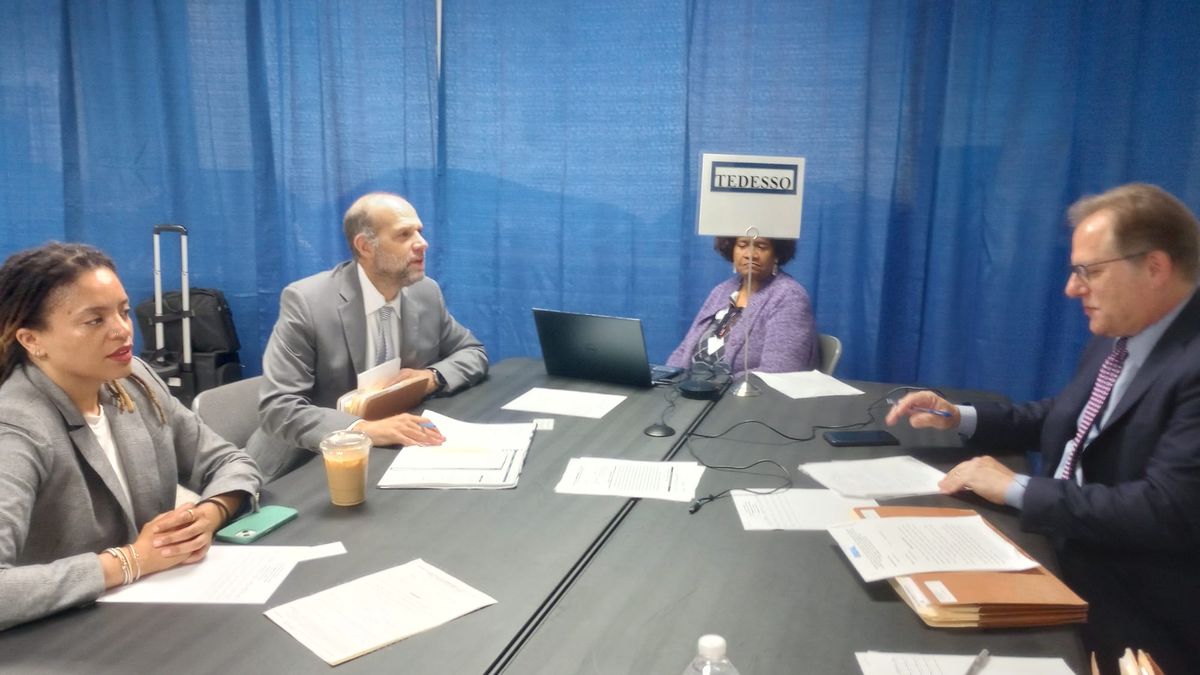
A unique Chicago political tradition is now underway: efforts to get school board candidates knocked off the ballot by challenging the legality of the signatures they gathered. In theory, the challenge process ensures candidates really have the popular support they say they have. But in practice, Chicago politicians routinely exploit the process to eliminate their rivals.
The system favors experienced candidates and those who can access legal talent to fight challenges. That's a problem for the many first-time candidates running in Chicago's first-ever full school board election.
For a rookie candidate, fighting for a spot on the ballot can "feel like a frat that's really, really impossible to get into," said Anthony Hargrove, a candidate in District 5A who was knocked out of the race last time but is on the ballot for November.
Board Rule partnered with Chalkbeat Chicago to dig into what's at stake, who's behind the challenges, and which ones might stick. You can read the full story over at Chalkbeat Chicago. But here's the TL: DR of what we learned.
The stakes. More than half the candidates--28 of 51 total--face challenges and could be knocked off the ballot. This includes 11 sitting board members.
Whether or not a challenge is sustained, the challenge process eats up candidates' time and money, which can take time away from campaigning and force less-advantaged candidates to drop out.
The shadow players. This time, The Urban Center, a centrist, pro-school-choice political organization, appears to be leading the charge on challenges. In a shift from 2024, the Chicago Teachers Union says it is not backing any challenges. So far, it's unclear exactly what role, if any, Common Ground Collective, a political group backed by billionaire Michael Sacks, is playing in the challenges. See our story for more.
Top challenges. While some challenges are likely to be tossed as frivolous, like a challenge to Board Member Norma Rios-Sierra's candidacy because her name is not hyphenated on her petitions, others are more serious. Victor Henderson, a West Side lawyer who is running for school board president, faces accusations that someone altered some of his signers' addresses.
Half of the candidates are facing a challenge related to a fine point in election law. Challengers argue that some people who helped school board candidates gather signatures were not allowed to do so because they also worked to gather signatures for candidates in the March primary. The full Chicago Board of Election Commissioners will likely be asked to resolve the issue. Read our story in Chalkbeat for a deeper dive into this topic.
School's Out for the Summer, But Principals Are Learning to Reduce Chronic Absenteeism
For the 2025-26 school year, Gunsaulus Principal Marlon Henriquez and his team sought to bring down chronic absenteeism at this Southwest Side magnet school. At baseline, they were at 12.7 percent of students missing more than 10 percent of the school year. "Could we get it into single digits?" Henriquez asked. The school set a goal to reduce chronic absenteeism to 9 percent.
The first step required shifting focus from overall attendance percentage– the traditional way of looking at attendance–to focusing on individual students missing many days. "We never actually focused on chronic absenteeism" before, he said. "That's the one we know makes the most impact in terms of loss of learning."
During the first semester, their efforts were hampered by Operation Midway Blitz, when fear of ICE kept many families at home. But in the second semester, a combination of smart data strategy, conversations with families, and friendly class-based competition for fun incentives moved the needle.
Henriquez credits his network data strategist, Rebecca Mitrovich, for helping his team figure out how to get notified if a student exceeded an absence threshold or started missing more days. "She made it possible," he said. His team also moved into tracking student attendance daily and having a human check in with families immediately when a student is absent, practices that have helped Chalmers and Chavez elementary schools lead the school district in reducing chronic absences.
For the kids, the game-changer was March Madness, an attendance tournament modeled on the NCAA basketball championships. Classrooms were put into brackets and competed to have the highest attendance. The winning classroom chose a field trip and the second-place classroom was invited to join them. In February, school attendance topped 96%. "That hadn't happened in February in I don't know when," Henriquez said.
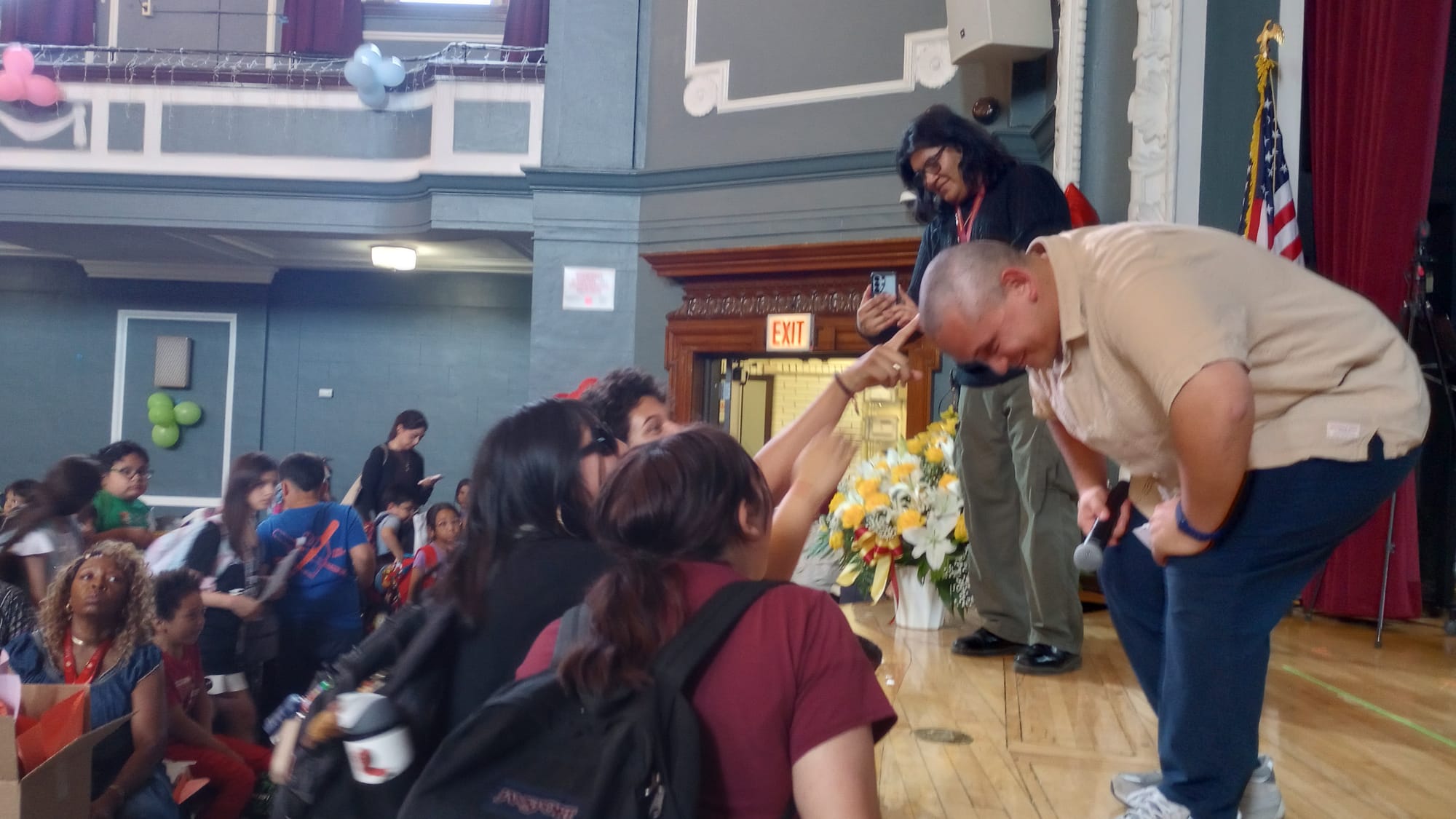
The final payoff came on the last day of school, when Henriquez made good on a bet that if chronic absenteeism dropped below 9%, he would shave his head. He did so on the Gunsaulus stage, to the delight of the entire student body.
"We want students to be present for learning," he said. "That's all it is."
Comments ()