School board ballot shakeup. Plus: Meet Zaccor, and CPS parents sound the alarm
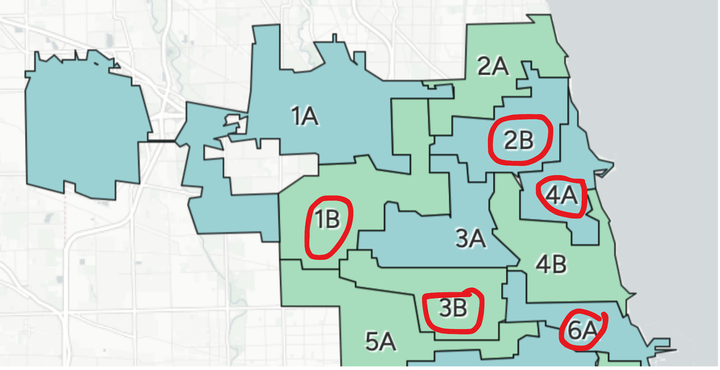
Dual-circulation challenges are dead. As many as 22 candidates are back in the race
By Isaiah Pinzino
A total of 51 candidates are running for office in November’s general election on the school board ticket.
Of those, 28 have had their petitions challenged. Within that pool, 22 of those challenges were objections called “dual-circulation.”
The objection alleges that petition circulators who are gathering signatures for nonpartisan school board candidates also circulated for partisan candidates in the primary this year. It could invalidate pages of signatures, knocking several candidates below the threshold needed to appear on the ballot.
Chicago’s Board of Election Commissioners made their call: They’ll rule against all dual-circulation objections to school board candidate petitions.
Board Rule’s Isaiah Pinzino reported this story with Chalkbeat. Read it in full.
Board Rule has been following the story of the petition objections. Check out our other reporting:
- Ballot Challenges: Let the Games Begin!
- In This Fall's Chicago School Board Elections, Many Voters May Only Have One Candidate to Choose From
InFocus: Karen Zaccor
An OG of Chicago-Style School Reform Says Remaking the Board is Going Slowly
By Maureen Kelleher
In high school, Karen Zaccor exhausted all of the courses offered, so she invented an independent study course in school reform and persuaded a teacher to sponsor her work.
“I designed a whole different school that would be more appealing to students, because I really didn’t like school,” the school board District 4A incumbent said.
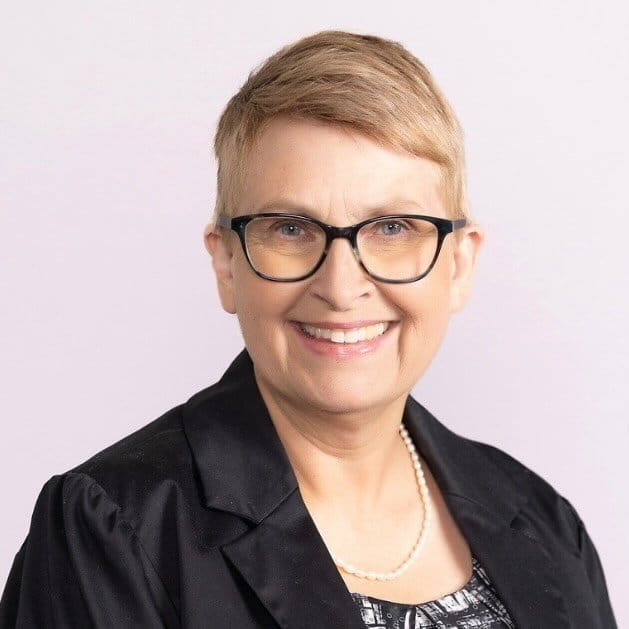
Zaccor’s vision for a whole different grammar of schooling led her to parent organizing in the 1980s to becoming a science teacher in the 1990s, to fighting for — then running for — Chicago’s first elected school board. Although she lost her 2024 campaign for a seat in District 4, Mayor Brandon Johnson appointed her to District 4A, and she is now running for that seat.
As she sees it, the board has begun to push back against the bureaucracy’s business as usual.
“I have the perception we’re asking a lot more questions and expecting to get more information before we just say, ‘OK.’ We’ve not voted for some of the stuff that has come up, or we’ve asked enough questions prior to it coming up that it has been taken off the table. That’s what I’m proudest of.”
At the same time, she said her biggest concern is “how slowly things move.” She’s also concerned that she and other board members have been asking for information and not getting responses.
“Maybe it’s because there are 21 of us, and we’re asking a lot of questions, so things take a lot of time. But I’ll just say there are things I asked last summer, and I’m still waiting for the answers.”
She said she thinks part of the problem is getting everyone in CPS to understand that board members now serve the people of their districts, not the mayor.
“We represent a district,” she said. “I talk to parents and students. They want things, and if you are not facilitating me getting that information and bringing it back, something is kind of wrong.”
As the school board’s only member with post-pandemic teaching experience in CPS, she said she sees her role as one of asking probing questions based on her deep experience in the system. She said she's been disappointed that the board has had fewer opportunities than she expected to delve into teaching and learning.
Priorities. Zaccor said she is aware the board has had fewer opportunities to set and move its own priorities than she would like.
“We’ve been stuck with putting out a lot of fires, right? That’s the reality,” she said.
Nevertheless, she has developed a set of priorities and shares them with families in her district at town halls and other forums.
They include:
- More money. Zaccor firmly supports pressing the state to fully fund the education formula that became law in 2017. “We have a broad need for progressive revenue. If we have all these ultra-wealthy people who got, in essence, $9 billion worth of tax breaks under Trump … surely they can give some of it back.” State money to fully fund schools would not only put CPS in the black, but it would make additional programming possible, she said.
- Common goals. “I think a lot about the strategic plan and the part that says students’ daily experience should be rigorous, equitable, and joyful,” she said. “We all need a common and commonly understood definition and set of metrics for those things."
- Student voice. “I love that CPS is talking more about it, but it’s not just input,” Zaccor noted. “Students have to be involved in the implementation.” Also: “It can’t just be good students, tending to be from the more elite high schools. Stop talking to just the good students. School already works for them. Talk to the one school doesn’t work for.”
- Fix the food. “It is the main thing I hear from students,” she said. “The main thing.”
Soundbite: As she said during the May board meeting, “We are not here to be a rubber stamp.”
Note: This post has been updated to clarify that Zaccor is the only board member with post-pandemic teaching experience in Chicago Public Schools. Board members Carlos Rivas and Anusha Thotakura both taught during or after the pandemic, but not within the school district.
Like Board Rule? Share or join us today!
Back of the Yards Parents Fear CPS Cuts Will Deepen Inequity in Bilingual, Special Education Programs
By Norah D'Cruze
Chicago Public Schools’ Community Budget Roundtables are off to a strong start as the district addresses its $732 million budget shortfall.
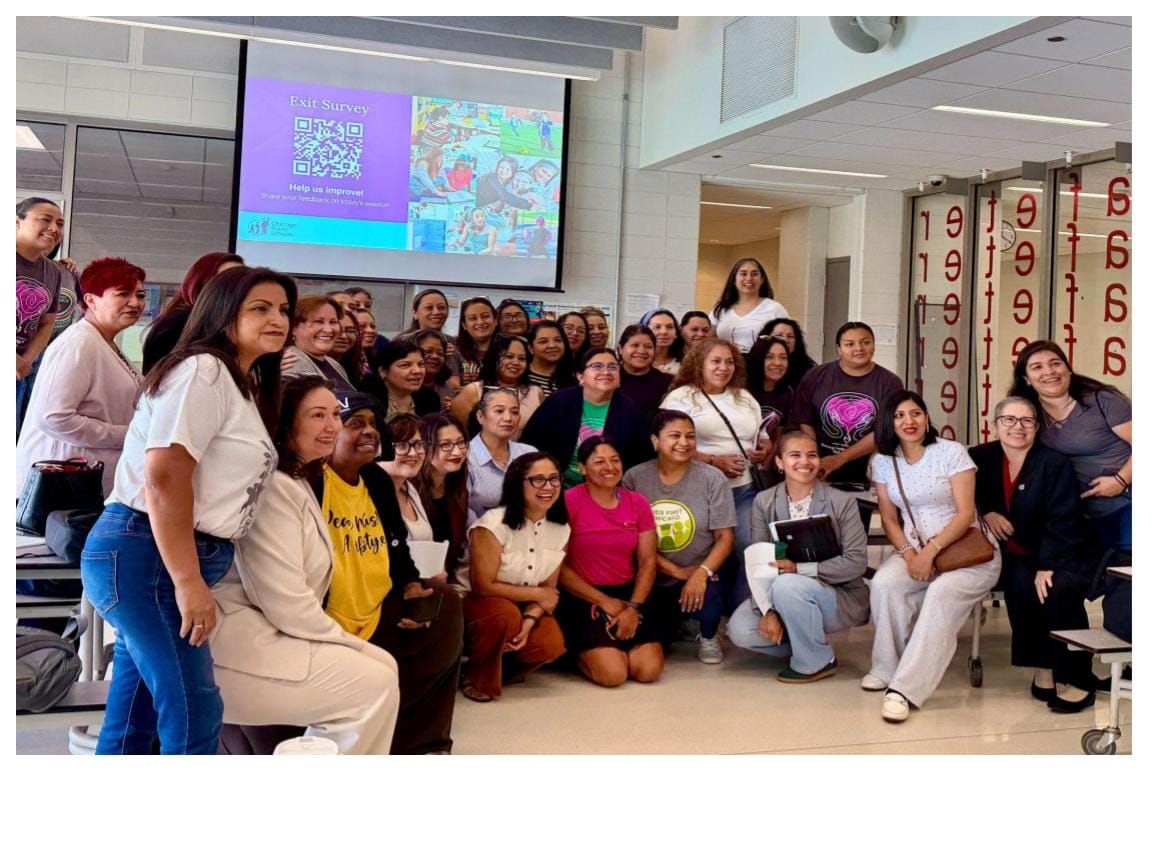
This week, members of the public met at George Westinghouse College Prep in Humboldt Park, Walter Henri Dyett High School For The Arts in Washington Park, and Back of the Yards High School — a session held in Spanish.
For those at the BOTY session, special education services and bilingual programs were central concerns.
“We want to know how this budget is going to help the children of immigrants,” Consuelo Martinez, a BOTY Local School Council community representative, said in Spanish. “How can we be sure that schools here and also on the South Side will receive the same level of support and education?”
She advocated for bilingual and special education programs she sees as instrumental for Southwest Side students and the city’s diverse, immigrant communities.
At the budget roundtable, South and Southwest Side students, parents, organizers and community members filled 12 tables. School board member Yesenia Lopez of District 7B, just north of BOTY, attended, along with CTU Vice President Jackson Potter.
The session underscored the existing gap in resources for South and Southwest Side communities, which attendees fear will widen as CPS confronts its budget deficit and impending cuts. Many parents said they did not trust that the resources among schools would be shared equally. They echo recent polling by The Chicago Public Education Fund that shows only 26% of Chicagoans are confident CPS is spending taxpayer dollars effectively, down from 33% in 2025. The fund is a nonprofit that focuses on developing and supporting school leadership in Chicago.
In all schools, there are students with special education needs, Angelica Ferreira, a Southwest Side mother, said in Spanish, but some don’t have the resources they need. She said she saw her special education child’s school struggle for classrooms and teachers while neighboring schools like Jones Prep had excellent classrooms and resources.
“We need transparency from CPS, we need them to take responsibility for the reality of their actions. Then we need a clear plan for the school year to lower the debt,” said one mother from Perez Elementary in Pilsen.
At the Board of Education meeting on June 25, members reaffirmed their commitment to bilingual programs despite potential budget cuts. Esmeralda Gutierrez, a CPS Bilingual Special Education Committee representative and Office for Students with Disabilities family advisory board member, also called for transparency and equity as staffing faces cuts.
With teacher and principal positions removed as part of the budget process, she asked in Spanish, “How can this budget secure resources for special education and bilingual students?”
Trust in teachers and principals is significantly high and growing, according to The Fund's polling. The same is not true for the Board of Education, despite upcoming elections. Only 59% of respondents said they are aware that there will be an election for CBOE members this November, and 61% said they “definitely” will vote.
Three more budget roundtables are scheduled during the next two weeks. You can RSVP here.
- July 1, 5:30 -7:30 p.m. (Virtual)
- July 7, 5:30-7:30 p.m., Theodore Roosevelt High School, 3436 W. Wilson Ave.
- July 13, 5:30-7:30 p.m., Gwendolyn Brooks College Preparatory Academy, 250 E. 111th St.
Board Rule is tracking the meetings. Stay tuned for a summary of them next week.
Candidate Events
By Norah D'Cruze
Claudia Peralta: Election Canvass, 6 p.m., Wed., July 1 and Mon., July 6. The location will be shared the day before. Sign up here.
Jason Dónes: Volunteer with Jason, 10 a.m., Sat., July 4, 1746 N. Kimball Ave. Sign up here.
Carlos Rivas Jr.: Summer Reception, 6-8 p.m, Wed., July 8, Muchos Gusto Barra + Cocina, 2700 N. Milwaukee Ave. Sign up here.
Brittany Kimble: Campaign Launch and Fundraiser, 5:30-7:30 p.m., Thurs., July 9, Sip & Savor Coffee House, 78 E. 47th St.
Candidates: To have your July events listed in a future newsletter, please email your information to norahdcruze@u.northwestern.edu.
Jobs
By Norah D'Cruze
CPS is advertising for dozens of jobs it anticipates it will need, including special education classroom assistants, teachers and temporary school counselors — particularly those who possess bilingual proficiency.
Comments ()